

 January 15, 2026
 On 29th December 2025, Google rolled out its December core update. But, how does this affect SEO? Google’s search algorithm is what decides where your website will rank in search results.
And, the most recent core update has impacted the ranking and traffic of 40-60% of websites globally. The sites that were affected include those with mass-produced AI content, generic “SEO content”, sites that lack E-E-A-T signals, and even those with outdated content.
According to Google, “This is a regular update designed to better surface relevant, satisfying content for searchers from all types of sites.”
Now the question is, do you want to rank high on Google, or get buried under your competitors?
If it’s the former, then you need search engine optimization (SEO) without fail.
And, we don’t mean the ‘keyword stuffing’ kind, we mean the next-gen of SEO, a.k.a., ‘search everywhere optimization’.
Because your audience is searching everywhere from ChatGPT to TikTok, Reddit, YouTube, and of course, also on search engines like Google and Bing.
We’ve prepared this ultimate guide to all things SEO, from its rock and roll origins to core SEO concepts, types of SEO, AI search, and the top SEO strategies.
But first, let have a look at how SEO has evolved over the years. Let’s go back to the beginning.
SEO- The Origins
It was the mid-1990s, even before Google was created, that SEO had its origins.
Legend has it that in 1995, Jefferson Starship, an American rock band, searched for its website on a search engine.
They were understandably annoyed when they found their official website all the way on the 4th page of the search engine results pages.
It was only after they increased the number of mentions of the keyword ‘Jefferson Starship’ that their website climbed quickly to the number one position on SERPs.
This is how SEO came into existence.

Now that you have seen where SEO came from, it is time to clearly define what it actually means today.
What is SEO?
SEO stands for search engine optimization. It is the process of improving a website so search engines can understand it, trust it, and show it to the right people.
SEO focuses on how pages are structured, how content is written, and how fast a site loads. It also gauges how well a website’s content matches what searchers are actually looking for online.
Ranking well is great, but currently, relevance is what matters to advanced search engines. When SEO is done properly, search engines can clearly see what a page is about and why it deserves visibility.
Why is SEO important?
SEO is important because it decides whether your website is seen at the moment someone is actively looking for something.
Search traffic comes with intent already attached to it. People are mostly searching online because they are either trying to solve a problem, compare options, or make a decision.
If your site does not appear there, of course, you are going to be invisible during the most valuable moment. SEO also builds long-term visibility. Pages can keep bringing traffic months or years after they are published. Unlike ads, that visibility does not disappear the moment spending stops.
After understanding the importance of SEO, it is necessary that you know how to differentiate between sustainable SEO practices and risky ones.
What is the difference between Ethical and Unethical SEO?
White hat SEO vs. Black hat SEO
White hat SEO is the ethical approach to SEO. It follows the established search engine guidelines and focuses on helping real users. It involves creating useful content, structuring pages clearly, and earning trust over time.
Black hat SEO does the opposite. It uses unethical tactics to manipulate rankings, intentionally using ‘shortcuts’ that search engines explicitly discourage. The methods used aim to create artificial signals rather than genuine relevance.
The good news is that these days, search engines are designed to evaluate behavior patterns, not isolated tactics.
Even though white hat SEO takes time to show results, you can depend on the fact that those results last. Conversely, black hat SEO often shows quick movement, but this is followed by sudden ranking drops that are difficult to recover from.
Benefits of White Hat SEO
Since your SEO efforts need to offer long-term results, white hat SEO is the way to go. By adherence to the rules and guidelines of search engines, you can expect stable rankings.
1. Stable Rankings
Web pages maintain their positions in SERPS instead of fluctuating after every update.
2. No Penalties
You avoid traffic drops caused by search engine algorithm updates or manual actions.
3. Better Reputation
Your brand gets a reputation for being honest and valuable, leading to higher trust.
4. Cost-effective
Despite some initial spending, you save money in the long term.
Black Hat SEO Techniques to Avoid
It’s true that black hat SEO tactics look tempting when you are trying to rank fast on search. Despite this, you must realize that these techniques backfire and incur severe penalties from Google.
These are some Black hat SEO techniques that search engines penalize:
- Keyword Stuffing– It’s best not to cram phrases that make pages unreadable and suspicious.
- Link Schemes– Stay away from paid or manipulative backlink networks.
- Cloaking & Sneaky Redirects– Do not show search engines different content than what you show searchers.
- Duplicate Content– Avoid copying pages that add no new value.
- Comment Spam– Posting links in comments damages trust signals quickly.
- Schema Misuse– Do not tag (mark up) information that does not exist.
- Fake E-E-A-T Signals– Avoid pretending expertise, authorship, or authority that you lack.
Now, we’re sure you want to know the fastest ways to rank high on search results. But you first need to understand how search engines actually function.
How Search Engines Operate

Search engines do three main things- they find pages, store them, then decide which ones deserve attention. In other words, the search engines function by crawling, indexing, and ranking web pages.
What is search engine crawling?
Search engine crawling is how search engines discover pages on the web. Automated bots (also called spiders, or crawlers) visit pages, follow links, and read code to see what exists and what has changed.
You can picture them moving from page to page, link to link. Crawling does not mean ranking. It only means the page was found. So, how often your site gets crawled depends on things like structure, links, updated content, and strong technical performance.
Once pages are discovered, the next step determines whether they are stored for retrieval.
What is a search engine index?
A search engine index is where discovered pages are stored and organised. After crawling a web page, search engines analyse the content and decide whether it deserves a place in their database. If a page is not indexed, it cannot appear in results.
What does it mean to be indexed by search engines?
You should care that your web pages get indexed accurately.
Why? Because, being indexed means your page has been accepted into a search engine’s database. It is stored, categorized, and connected to searches it might answer.
Without this step, even strong content stays invisible, no matter how well-written or well-intended it may be.
Why do some pages never appear in search results?
Pages often disappear because of simple issues. They may be blocked, marked ‘noindex’, too slow, or thin on value to online searchers.
Mistakes like weak internal linking and repetitive content can cause this. When pages send confusing signals or fail to help anyone, search engines tend to ignore them.
It is only after crawling and indexing that your web pages get ranked on search results.
What is search engine ranking?
Search engine ranking is the process of ordering a list of web pages for a specific search, from most relevant to least relevant. The aim is to allow users to find what they need quickly.
Here we can see the search results for ‘table lamps for bedroom’ are the top businesses selling table lamps.
Site owners should know that ranking is competitive by nature. Your page is always measured against others targeting the same intent. Positions on search results shift as content changes and users behave differently.
Web pages are ranked based on certain signals:
1. Relevance signals
Relevance signals tell search engines whether your page actually answers the search. These include topic focus, clear headings, and natural keyword usage.
Search engines take into account the meaning behind queries. So, exact wording doesn’t matter much.
When your web pages have a focused theme, they tend to perform better. But, if your content is unclear or tries to cover too many unrelated topics, the page’s relevance weakens, even if the page is well written.
2. Authority signals
Authority signals help search engines decide whether your page deserves trust. These include quality backlinks, brand mentions, and consistent topical coverage.
If you expect your online authority to grow, you would be wise to get other credible sites to reference you naturally. Be cautious though, because links that search engines consider ‘forced’ tend to lower your authority.
3. User satisfaction signals
These are the signals that reflect how people respond after clicking your page. It includes time spent, scrolling, and whether users return to results quickly.
Search engines prioritize pages on which people stay, read, and explore. When they leave your web page immediately (in SEO terms ‘bounce’), search engines see it as a sign suggesting low quality or irrelevant pages.
Now that we have covered some of the mechanics behind SEO, we need to look at the human motivation behind searches.
Search Intent: Why is it important for SEO?
Search intent explains why someone types a query, not just what they type. If you miss that reason, it will be harder to rank high consistently. You might attract clicks, but they are likely to leave quickly. That signals to search engines that something went wrong. When intent is matched, content feels right immediately.
Why intent matters more than keywords alone?
No one is suggesting that keywords don’t matter. But, they only function as clues. It is search intent that explains the outcome the searcher wants. Someone searching quickly may want reassurance. Another may want an in-depth analysis.
A keyword list cannot show that difference. That’s why search intent matters. Often, it is this gap that decides your ranking on SERPs.
Types of Search Intent
Treating all keywords equally causes confusion. Intent categories help you frame content properly, allowing you to directly address the user’s underlying goal. Each type signals a different expectation from results.
What are the 4 types of search intent in SEO?
1. Informational searches

Informational searches happen when someone wants to learn or understand something.
The search queries are usually questions, explanations, and ‘how-to’ phrases. The searcher is not buying yet, as they still want clarity.
Now, if your page answers clearly and stays focused, the searcher will be able to trust you.
Trying to persuade your audience will not work as well as offering comprehensive, valuable information.
2. Navigational searches

Navigational searches occur when someone already knows where they want to go. The searcher types a brand name, product name, or platform, expecting a specific destination. This includes login pages, dashboards, and official support sections.
This intent calls for clarity and accuracy. If your pages confuse users or bury key links, frustration follows. Clear structure helps. When navigational intent is satisfied quickly, users trust the brand more and return without hesitation.
3. Transactional searches

In this type of search, the searcher has a strong intent to act. They may want to buy, book, subscribe, or sign up.
Typically, words like price, deal, or near me are used. So, in case your content is vague or over-explains things, searchers move to other search result options.
What you need to display is clear offers, fast pages, and reassurance. This intent connects directly to revenue and measurable business outcomes.
4. Commercial searches

Some searchers are on the verge of buying, but are still unsure and need to clear their doubts. The searcher is comparing options, reading reviews, and weighing benefits. You see searches with words like ‘best’, ‘top’, or ‘vs’.
At this stage searcher are looking for credibility and transparency. For this, you can share honest pros, cons, and clear positioning to help them decide with confidence.
Buyer guides and expert opinions often perform strongly at this stage of research journeys.
By now, we know the significance of search intent and its various types. The next step is identifying the terms people actually use to express their intent.
Keyword Research
Through the strategic process of keyword research, SEO professionals can learn the exact words and phrases people are typing when searching online for particular information, products, or services.
Google’s John Mueller says, “Search engines are getting better at understanding what users actually want, not just matching keywords.”
Now, you may have noticed that every query a user enters into the search bar reflects a moment of need, curiosity, or intent.
When you look closely with the help of keyword research tools, you start noticing patterns. These patterns are reflected in language, specificity, and urgency.
The right keywords help search engines understand relevance and help users feel understood the moment they land on a page.
Ways to do Keyword Research Effectively
Choosing relevant keywords
A keyword can be considered relevant if and when it matches what the searcher expects to see next. It has been found that high-volume search terms (popular keywords) often attract mismatched intent.
On the other hand, lower volume phrases are able to deliver better engagement and conversions.
Suppose a user searches for “best CRM for small teams”. It is clear they are not browsing definitions but are evaluating the options available to them.
The significance is simple. If your page explains what a CRM is, they leave. If it helps them evaluate options, they stay. That alignment directly affects engagement, rankings, and conversions.
Understanding keyword intent and context
Intent gives keywords meaning. Context tells you how Google already interprets that intent. Before writing, you can check the current results and notice formats. Are guides ranking, or product pages? Are videos dominating?
Matching that context matters more than keyword density. Google has confirmed this repeatedly, including in its Search Quality Rater Guidelines.
Understanding Short-tail vs long-tail keywords
You may have come across these terms before, but what is the difference between long-tail and short-tail keywords? Short-tail keywords are broad, high-volume searches with unclear intent. Long-tail keywords are specific multi-word phrases that attract searchers who are much closer to making a buying decision.
| Aspects | Short-tail keywords | Long-tail keywords |
|---|---|---|
| Length | One or two words | Three or more words |
| Purpose | General discovery | Specific needs |
| Competition | Very high | Lower |
| When they help | Early research stages | Decision-making stages |
| Best use | Building visibility | Driving meaningful actions |
Someone searching “email marketing” is exploring. Someone searching “email marketing software for ecommerce startups” is deciding.
While short-tail offers higher traffic, long-tail keywords result in higher conversions. Most sustainable SEO strategies prioritize the latter.
Top 4 Keyword Research Tools
If you need a fast and easy-to-use method to carry out keyword research, you can choose from the popular tools available.
1. Semrush
-
Shows keyword demand and ranking difficulty in one place
-
Useful for competitor keyword and content gap analysis
2. Ahrefs
-
Strong data on keyword difficulty and search potential
-
Helps find keywords competitors already rank for
3. Google Keyword Planner
-
Uses Google data to show real search interest
-
Best for checking keyword volume and basic competition
4. KWFinder
-
Easy tool for finding low competition keywords
-
Clear interface that suits beginners and small teams
So, once keywords are chosen, specific keywords are mapped to individual pages. This brings us to how pages are built and presented online.
Types of SEO
On-Page SEO
On-page SEO is everything that happens on your website to help search engines and people understand a page.
It covers content, structure, and signals that explain what a page is really about. When this is done well, your pages are clear, relevant, and easy to trust.
With strong on-page SEO, you will often notice your website achieves better rankings, stronger engagement, and more consistent traffic. This is because search engines can confidently match your page to the right searches.
Let’s look at what is involved in on-page SEO.
What are the Parts of On-page SEO?
Content usefulness and satisfaction
The content on your web pages will achieve good results only if it solves the reason someone searched in the first place.
If a visitor lands on your page and immediately finds answers, comparisons, or clarity, that satisfaction prompts them to take further actions.
Useful content encourages searchers to stay longer on your website, scroll, and interact.
On the other hand, search engines can gauge if your bounce rate is high because the content of your website is poor or irrelevant.
Page titles, meta descriptions, and headings
These are the elements on a web page that create first impressions for searchers.
The title indicates to search engines and users what the page promises to contain. Meta descriptions act like a mini ad or preview, and they influence whether someone clicks on your page link or not. The headings within the page guide readers while they are on the page.
To improve click-through rate of your pages, you can use clear, honest wording for these elements.
Content structure and readability
Research from the Nielsen Norman Group shows that about 79 % of visitors scan a page instead of reading it word-for-word.
So, contrary to what you think, people who come to your site are not interested in reading loads of text on your website.
Your web page needs to be scannable. This means that the content structure should be designed for visitors who skim rather than read every word.
It’s best to use short paragraphs, logical sections, and clear subheadings to enable ease of readability. You can also use bulleted/numbered lists and the inverted pyramid, where key information is prioritized at the top of the page.
Images, media, and accessibility
When someone lands on your page, they look for some elements that help them quickly understand what it’s all about. That is where images and media earn their place.
Suppose you are explaining how a pricing calculator works. A labelled screenshot showing each input field immediately answers questions rather than long text-based explanations.
Similarly, accessibility is also important for websites. This can be achieved through alt text, which is the description of the image that screen readers check. It gives search engines additional context about the page. Both users and search engines benefit from this.
Internal linking and contextual relevance
Internal linking is a part of on-page SEO, and it defines what your site is actually about. When one page consistently links to related pages using descriptive anchor text, search engines can identify a topic cluster rather than isolated URLs. That cluster is what builds topical authority.
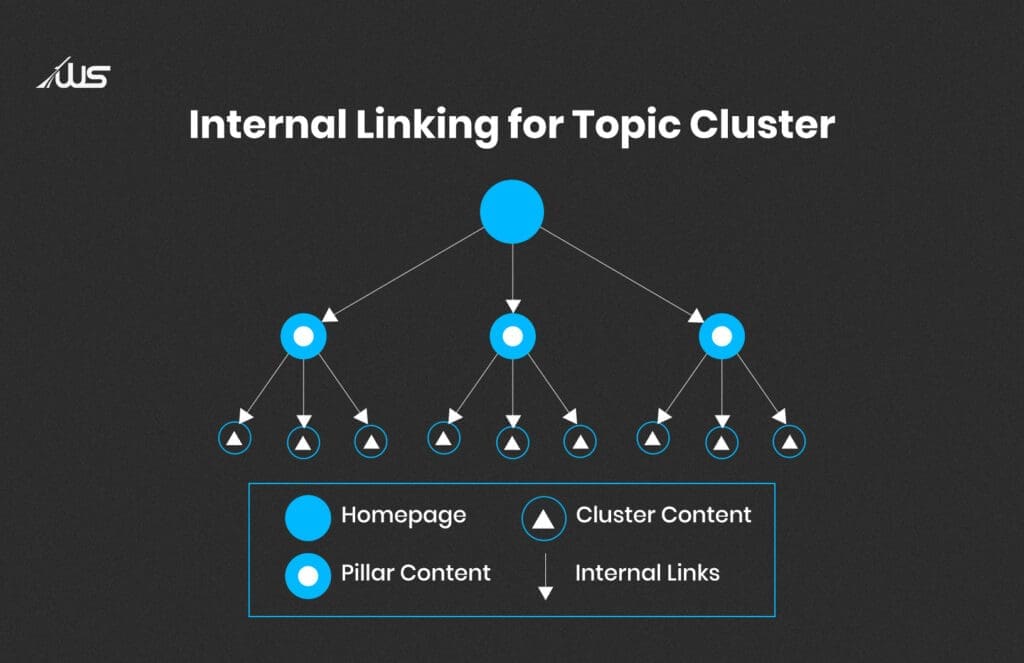
Here, we can see a website homepage linking to pillar pages, which then link to multiple cluster pages to organize content by topic and guide search engines through a clear hierarchy. Internal linking increases the likelihood that your key pages rank well and get high revisits.
But, how should you go about doing on-page SEO? Let’s see.
Steps To Optimize A Page With On-Page SEO

Behind everything visible on your website, there is a technical layer. It is this layer that determines whether or not your website is successful.
Technical SEO Optimization
If content is what people see, technical SEO is everything they never notice until something malfunctions. It controls whether search engines can access your pages, understand them, and display them at the right time.
You might have strong content, but if your site loads slowly, blocks crawlers, or behaves poorly on mobile, your rankings will consistently be low. Technical SEO keeps the foundation stable so your content actually gets a chance to perform.
Here’s what is included in Technical SEO:
1. Crawlability & Indexability
It’s obvious that search engines will not be able rank pages they cannot reach. Bots can only access your pages if your website is crawlable.
And, it is only when a webpage is discoverable that it can be added to a search engine’s database (indexed). This stage is even before it appears in search results.
Using clean crawl paths and clear indexing signals helps search engines discover and retain your content properly.
2. Site Speed (Performance)
If you have ever clicked back because a page took too long to load, you already understand the problem.
Google uses site speed, especially Core Web Vitals, as a direct ranking signal. Essentially, websites that load quickly are more likely to appear higher in Google’s search results.
You can improve website speed performance through several key areas, including image optimization, server response times, script management, and effective caching strategies.
3. Mobile-Friendliness
If you check your web traffic analytics, you will likely see most visitors arriving from phones.
Google uses mobile-first indexing, meaning it evaluates your site based on its mobile version. On mobiles and smartphones, if your website text is too small, if buttons overlap, or even when layouts get distorted on smaller screens, your rankings can drop.
4. Security (HTTPS)
When visitors land on your site, they either trust it instantly or not at all. HTTPS encrypts data between the browser and server, protecting users from interception. If your site still shows security warnings, many people leave before reading a word.
Even search engines treat HTTPS as a quality signal because it protects users. You would need to install a valid SSL certificate to prevent browser warnings and remove any friction that impacts user engagement and visibility.
5. Site Architecture & Internal Linking
How easily can someone navigate through your site without doing a search?
If your site’s architecture is logical, the search engine groups together all the related pages. This, in turn, improves crawl efficiency, distributes authority, and helps priority pages get surfaced often on search engine results.
6. Structured Data (Schema Markup)
Structured data helps search engines understand the meaning behind the words on your web page. It is code that labels elements like reviews, products, FAQs, and articles using standard formats.
When applied correctly, schema can trigger rich results such as star ratings or expanded snippets. You have to just clarify the context of your content, and the search engine increases the chances your content being displayed prominently on results pages.
7. Duplicate Content Management
When similar pages exist, search engines struggle to decide which version deserves visibility.
If you have ever seen multiple URLs showing the same page, that is a case of duplicate content.
You need canonical tags, consistent internal linking, and clean URL structures to guide search engines toward the preferred version. This protects your ranking signals from being split unnecessarily.
Local SEO
Local SEO is about getting displayed on search results when someone nearby needs what your business offers.
So, suppose someone is standing a few streets away from your business, phone in hand, ready to act. Local SEO helps your business appear in that moment, with the right details, clear signals, and reassurance that you are genuinely present and relevant.
Understanding Local SEO
The fact is, local SEO focuses on how search engines decide which nearby businesses to show for location-based searches. By optimising, you are influencing maps results, local packs, and branded listings. People who are doing a quick scan online will find you.
When someone searches from a specific area, search engines try to match intent with businesses that are well-established in that area.
Your job is to make that connection obvious and easy to trust for actual people making decisions in nearby locations.
How to optimize for Local SEO?
To strengthen local SEO, fully set up your Google Business Profile, keep your name, address, and phone details consistent everywhere, earn local listings, publish location-focused content, and stay actively involved in customer reviews.
There are a few important ways to strengthen your business’s local SEO.
1. Optimizing your Google Business Profile (GBP)

If you start with GBP (previously known as Google My Business), you are shaping how you appear in maps and local results. As seen in the image above, this can be done through accurate categories, photos, hours, and updates that reassure searchers you are active locally.
2. Getting local citations (NAP consistency)
NAP involves keeping your business’s name, address, and phone number identical across directories, platforms, and listings. You are essentially making sure search engines and people see a single, reliable business identity everywhere online.
3. Managing online reviews
When reviews come in, it’s a good idea to leverage them to shape your future customers’ perceptions. You can respond to reviews, display professionalism, and accountability, which signals trust to local customers.
4. Creating location-specific content
It’s important to address people in your area directly. You can do this by creating pages tied to neighbourhoods, local services, and local needs. This also gives search engines a clear geographic context to rank.
Once your local visibility is in place, the next thing shaping those searches is the device people use. For this, we’ll look at mobile SEO.
Mobile SEO and Core Web Vitals
What is Mobile SEO?
Mobile SEO involves proven techniques that make sure your website ranks high when someone is searching on a smartphone or a tablet.
According to Statista, mobile devices (excluding tablets) accounted for 62.54 percent of global website traffic. So optimizing your site for mobile phones is vital.
If you are still wondering why mobile SEO matters, it is simple. Google mainly looks at the mobile version of your site when deciding rankings. In 2021, Google made CWVs a part of its ranking algorithm. That makes mobile optimization something you cannot treat as optional anymore.
Best Practices for Mobile SEO
What often gets missed is that mobile SEO is less about design tricks and more about how real people experience your site on a small screen.
-
Use responsive layouts that adapt cleanly across different screen sizes
-
Keep text readable without forcing users to zoom or scroll sideways
-
Make buttons and links easy to tap with one thumb
-
Reduce pop-ups that interrupt content on smaller screens
-
Optimise images so pages load quickly on mobile networks
Understanding Core Web Vitals and its role in SEO
Core Web Vitals is Google’s framework for measuring how a page actually behaves when you load and use it. You can think of them as web page signals that reflect speed, responsiveness, and visual stability.
What are the Core Web Vitals?
1. Largest Contentful Paint (LCP)
LCP tracks how quickly the main content loads, usually the largest image or text block you see first.
2. Interaction to Next Paint (INP)
INP measures how fast your page responds when someone taps, clicks, or types on it.
3. Cumulative Layout Shift (CLS)
CLS looks at whether elements move around unexpectedly while the page is loading.
Why is this important for you to know? Optimizing CWV is a key part of technical SEO, and if your website has strong CWV, Google will reward it with higher search visibility.
To know more, check out 10 Core Web Vitals Optimization Tactics to Skyrocket Your SEO.
Apart from your own site, you can gain the trust of searchers and search engines based on how other websites (especially authoritative sites) reference you. So, let’s look at the role of link building in SEO and why it makes a difference.
Off-Page SEO: Link Building & Establishing Authority
Link building is about creating signals. When another website links to your site, it is essentially vouching for you. Now, since search engines cannot experience your content the way people do, they rely on these external references. This is how they gauge your authority in a particular domain.
What are links in SEO?
In simple terms, links or hyperlinks are clickable pathways from external websites to your website. They act as a signal to users and search engines that your website is trustworthy and an authority on the subject.
Why does that matter? Because links help search engines discover pages and decide which ones deserve attention.
How to build high-quality backlinks
Here are the proven ways to build backlinks for your website:
1.Create link-worthy content
Craft linkable content like original research or ultimate guides that directly address user pain points or provide unique insights.
2. Submit Guest Blogs
Contribute useful articles to relevant industry websites where your expertise can add context and insights naturally.
3. Resource Page Outreach
Contact website owners to suggest your valuable content (guides, tools, etc.) to be added to their existing resource pages.
4. Carry out Competitor Backlink Analysis
Check where your competitors’ pages earn links from, then assess which sources make sense to approach with stronger or more current insights.
Importance of E-E-A-T and Building Topical Authority
Once other sites start linking to your content, another question comes up. What exactly are they validating? This is where E-E-A-T and topical authority come in.
What is E-E-A-T?
E-E-A-T stands for Experience, Expertise, Authoritativeness, and Trust. It is a Google framework for evaluating the quality and credibility of content. Practical speaking, it checks whether your content is generic or based on experience. Search engines scan your web pages looking for things like author details, first-hand insight, accurate information, and consistency across your site.
Why should you care?
It influences (indirectly) you rank on Google and furthermore boosts your visibility on AI search.
What is Topical Authority?
When a website can showcase expertise and credibility on a particular subject or domain, it is demonstrating topical authority.
This can be achieved through in-depth content pieces that are interconnected with each other.
So, a website with high topical authority on “coffee makers” would have articles on different types, cleaning guides, brewing techniques, reviews, and comparisons, all linked together,
If you want a detailed strategy to build topical authority, check ‘How to Build Topical Authority with EEAT to Boost Rankings’
Ways to Build Topical Authority to Rank in AI Search
1. Select a Niche
Choose a focused subject area where you can cover questions deeply, instead of spreading thin across unrelated topics without clear expertise.
2. Implement Topic Clusters
Build pillar pages for core themes, then support them with cluster pages that explore subtopics and link back clearly.
3. Optimize for AI Readability
Use question-based headings and concise answers so AI systems can easily extract meaning without guessing intent or context.
4. Demonstrate E-E-A-T
Highlight real expertise through author credentials and strengthen claims by citing authoritative sources that support accuracy and trustworthiness.
As you implement some or all of the SEO strategies we have covered, you will need to know what is working and what is not. Luckily, there are simple tools you can use to measure your SEO efforts.
Tracking SEO Performance Metrics
There are certain key SEO metrics that you would need to monitor to gauge whether your SEO strategy is effective or not. Based on your findings, you get the chance to make website improvements to boost ranking and conversions.
Which SEO metrics actually matter?
More than other SEO metrics, it is important to track visibility, organic traffic growth, keyword rankings, and click-through rate (CTR).
To track your SEO performance, focus on these SEO metrics:
-
Visibility
Visibility measures how often your pages appear in SERPs. Google organic search is responsible for 57.8% of the world’s web traffic. This indicates that appearing in Google’s unpaid results is fundamental for any online presence’s success.
-
Clicks
Clicks tell you how many people actually chose your site from the search results. Visibility without clicks could signal that your titles or descriptions are not resonating with people. A strong presence in search is only valuable when it leads to visits.
-
Engagement
Engagement shows whether people remain for some time once they land on your web pages. Check metrics like time on page, scroll depth, and engaged sessions to learn if your content actually holds the searcher’s attention.
-
Conversions
SEO leads have a 14.6% sales conversion rate, compared to 1.7% for outbound leads People searching on Google are actively seeking solutions, making them far more valuable leads than people who are interrupted by a cold call or an unwanted ad.
SEO Tools for Tracking Performance
Talking about numbers leads us to tools. What are SEO tools? They are platforms that collect search data, user behaviour, and performance signals into dashboards you can analyse. These tools help you spot trends, compare periods, and understand which pages are performing well and which are not.
| SEO Tool | What it helps you track | USP (Why people use it) |
|---|---|---|
| Google Search Console | Shows how often your site appears in Google search, which queries bring traffic, and which pages get clicks | Direct data from Google about how your site is performing in search |
| Google Analytics | Shows what people do after landing on your site, including pages viewed, time spent, and completed actions | Shows real user behaviour after someone lands on your site |
| Semrush | Helps you track keyword rankings, visibility changes, and how your site compares to competitors | Combines SEO, competitor insights, and content opportunities in one place |
| Ahrefs | Helps you understand backlinks, ranking keywords, and which pages have strong or weak authority | Industry-leading backlink data and link analysis depth |
Once you start tracking your SEO performance, you begin to notice patterns. Plus, you get to check the exact SEO mistakes that are blocking your growth and preventing you from ranking well on SERPs and AI search.
Common SEO Mistakes That Websites Should Avoid
Businesses tend to make several SEO mistakes.
The good news is that most of these issues are fixable once you can clearly see them for what they are.
-
Ignoring Search Intent and Chasing Keywords
Many businesses focus on keywords without understanding why someone is searching.
Suppose someone searches “best accounting software for freelancers” and lands on a generic product overview. The mismatch signals poor relevance and hurts performance.
-
Publishing Thin or Repetitive Content
Some pages on websites exist just to exist. You must realise that very short articles, repeated ideas, or lightly rewritten content rarely add value.
Search engines notice patterns over time. Visitors glance at it, leave, and rarely return.
-
Neglecting Technical SEO Basics
You may have pages on your website that load slowly, have broken internal links, or pages that never get indexed.
All these technical issues limit their visibility on search. Why is that? Because search engines cannot properly crawl or understand it.
-
Overusing Links Without Context
Suppose a blog post jumps across unrelated topics just to insert links. It feels distracting to readers and tells search engines the page lacks a clear focus.
These problems occur when links are forcefully added for SEO.
-
Forgetting to Update Old Content
Many websites are guilty of merely publishing content once and never touching it again.
If someone lands on a guide written years ago with obsolete advice, you will lose their trust instantly. Regular updates help maintain relevance and improve rankings.
Now that we know what not to do, let’s see what some of the proven SEO strategies for websites are.
SEO Best Practices for 2026

With AI Overviews and zero-click searches, there are new search engine optimization strategies that come into play. Here’s what your SEO strategy for 2026 should include.
1. Build Content That AI Understands
In 2026, SEO is as much about machines as people. That would mean writing with meaning and context, and organizing content into clusters that reflect real user intent. Your aim should be that both search engines and AI trust your expertise.
2. Make Your Content Easy to Cite by AI
If AI answers pages and assistants pick up your words, you want them showing your brand, not a competitor’s. Break content into clear sections, use schema, emphasise definitions and FAQs, and optimise for answer-ready formats. It’s less about ranking and more about being the source that AI and large language models actually reference.
3. Strengthen Your E-E-A-T Signals
We’ve already discussed what E-E-A-T is about. Your priority needs to be the people reading your website. For this you would need to display credentials and publish useful content with original insight. Both humans and machines need to see you as a trusted resource.
4. Keep Your SEO Foundation Strong
This goes without saying, but you need to reinforce your SEO basics. What’s that? Make your site fast, crawlable, and easy to navigate. Check and fix any broken links and make sure your internal links are relevant and functional.
These SEO best practices are fundamental for engines and AI bots to surface your content on SERPs.
5. Expand Beyond Traditional Search
By now you have realized that just showing up on Google is not enough. Your topic should surface across platforms, including AI overviews, video platforms, social search, and voice interfaces. Maximize your audience reach. For this, you have to learn where your audience asks questions, and preparing answers for everywhere they might potentially search.
6. Optimize for Moments of Curiosity
These days, when people search for anything online, they do not resort to keywords. In fact, they may ask questions or explore ideas on social media. They also watch videos and use chat assistants. Old school SEO won’t help. Now, it means being ready for these “moments of curiosity” wherever they occur. No matter the type of search, whether typed, spoken, or visual, your content feels helpful and relevant.
7. Focus on Commercial and Behavior Signals
Apart from ranking for relevant keywords, your SEO should have a real business impact. This can be in terms of conversions, engagement, click-through rates, and user behavior. You would need to measure how people interact with your content and make adjustments based on what actually encourages clicks and meaningful actions for your business.
8. Invest in Brand and Digital Presence
In case you don’t know, AI and search engines actively look for signals of who you are, not just what you display online. A website can earn visibility through thought leadership, industry mentions, publications, and social proof. When your brand is recognized across the web and in conversations, it strengthens authority and helps AI systems link your content back to a trusted source.
To get a better idea of where SEO is headed in 2026, it helps to look at how people search online as technology evolves.
Emerging Trends in SEO for 2026
As we move through 2026, the big shift you must have already noticed is the move from “searching” to “answering.”
Currently, algorithms are prioritizing how well websites can satisfy a human’s specific intent rather than how many times you repeat a phrase.
AI & the Future of SEO
The old days of trying to outsmart a robotic crawler with “hacks” are officially over. AI does not take into account your website’s keyword density. It is designed to check whether searchers leave your site actually knowing more than they did before.
How is AI used in SEO?
Among other things, the biggest impact of AI in SEO is shifting focus from ranking for keywords to being cited in AI-generated summaries, for zero-click search, and necessitating topical authority and structured data in order for sites to appear in direct answers.
1. Generative Engine Optimization (GEO)
What is GEO
GEO is a smart way to set up your content in such a way that AI models (like ChatGPT or Google’s summaries) can easily read it, trust it, and use your specific words when they give searchers answers.
GEO Vs SEO
Traditional SEO focuses on getting people to click a link to visit your site, whereas GEO focuses on making your information the actual answer that the AI displays to the user.
For a local bakery, SEO gets your website to show up when someone types “bread near me,” while GEO ensures that when someone asks an AI “Who has the fluffiest sourdough in town?” the AI specifically names your shop and explains why.
To know more, you can check: GEO vs SEO: The Ultimate Battle for Web Traffic Dominance
2. Zero-Click Search
You may have seen this happen. You might search for a celebrity’s age, and you never actually have to click a website, because the answer is right there on the screen.
That’s a zero-click search. What does that mean? It means the search engine has become the “end” of the journey.
Zero-click snippets include:
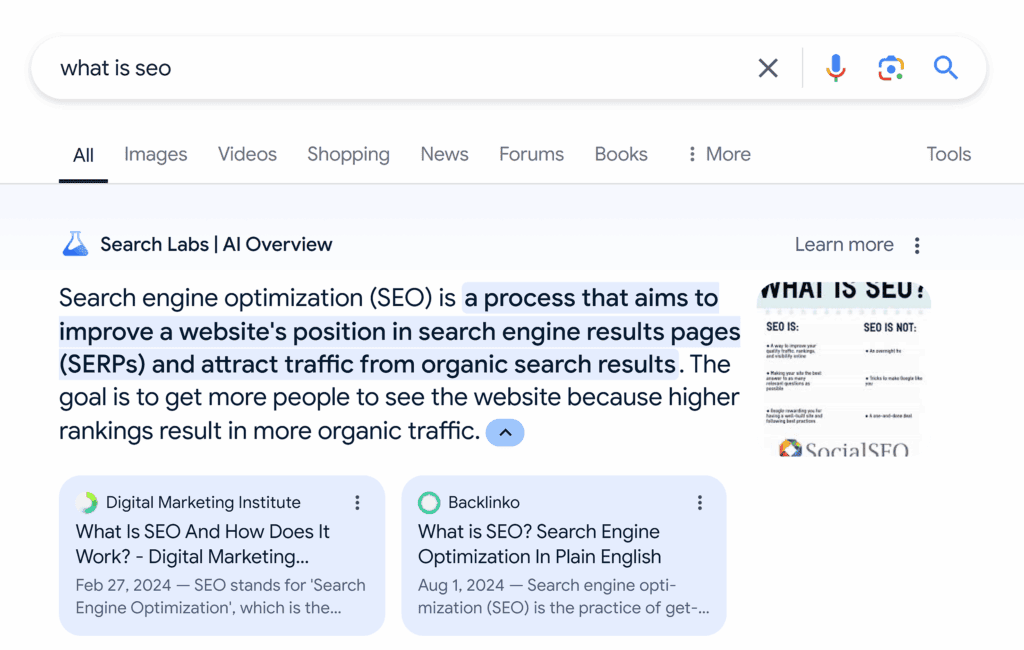
AI Overviews
The AI-generated summaries at the top that answer you instantly.
Knowledge panels
The info boxes on the side that show key facts about people or brands.

People Also Ask boxes
The list of related questions you can click to see quick answers.

Featured snippets
The highlighted block of text at the very top of the results.

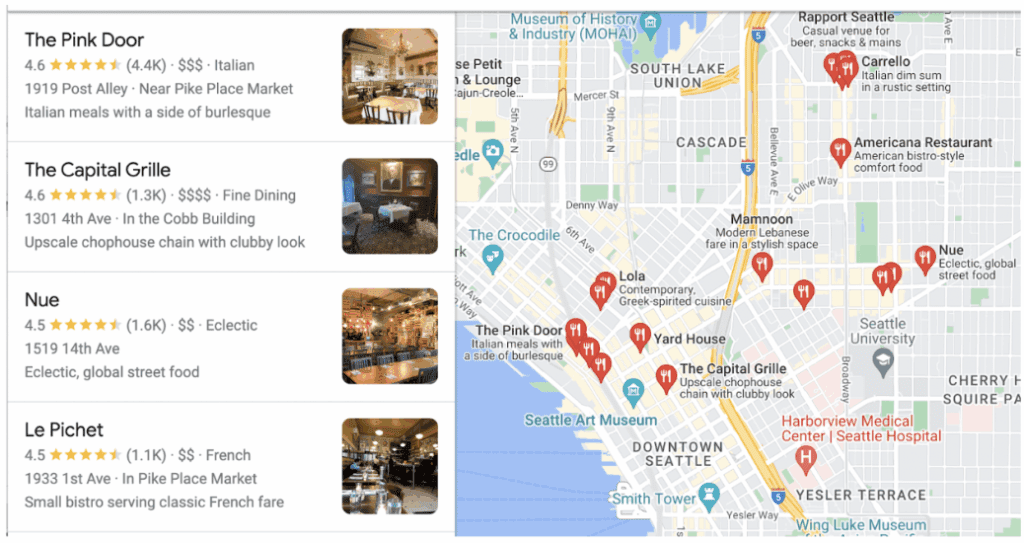
Local packs
The map and list of the three closest businesses to your location.
3. What is VSO?
VSO is the strategy of making your website optimized for a person talking to it. When someone asks their kitchen speaker for help while their hands are covered in flour, they aren’t using “keywords”, they are asking a person.
Recent data shows that in 2026, more than half of internet users in the US will use a voice assistant. This means if you are not creating content for VSO, you are invisible to more than half of your potential audience.
Is voice search optimization worth it?
Yes, voice search optimization is vital because it captures the growing number of people who use hands-free technology to find immediate, local answers while they are on the move.
How To Make Your Website Voice-Search Ready
Use Long-Tail Keywords: Optimize your site for long-tail, conversational phrases like “Where can I find…” instead of “Best shops.”
Answer the “Who, What, Where”: Create an FAQ page that mirrors the exact questions you would hear in real conversations.
Register your local data: Ensure your Google Business Profile is complete, as most voice queries are looking for things nearby.
Speed is everything: Voice results load 52% faster than average pages, so keep your wesite lean and clutter-free for faster loading times.
4. AI Optimization (AIO)
Maybe you are wondering, ‘Is AI replacing SEO?’ Well, not quite. Traditional SEO is not being replaced by AI. Artificial Intelligence is simply enhancing it. You are now optimizing for a dual audience: the human reader and the AI “brain” that filters information for them.
AIO: How to Rank in AI Search
| Strategy | Action Step | Why it Works |
|---|---|---|
| Direct Answer Blocks | Place a 2-3 sentence summary under every H2. | AI prioritizes "extractable" facts for its summaries. |
| Trust Signals | Include clear author bios and link to expert sources. | AI filters for E-E-A-T (Experience, Expertise, Authoritativeness, Trustworthiness). |
| Entity Linking | Connect your topic to well-known brands or concepts. | It helps the AI place your content within a wider web of known facts. |
5. AEO- Answer Engine Optimization
What is AEO?
AEO, or Answer Engine Optimization, is a technique for creating clear, concise content that directly answers user queries. This is the new standard and format that AI-powered search engines and voice assistants pull and display.
Benefits of AEO
-
Better presence inside AI answers and instant results
-
Brand credibility improves when content is repeatedly referenced
-
Voice assistants surface your content more naturally
-
Users reach the information they need without unnecessary steps
-
Content remains relevant as search formats continue evolving
6. Large Language Model Optimization (LLMO)
LLMO is about making your content “digestible” for the massive AI models that power tools like Claude or Gemini. Confused?
To put it simply, instead of just using keywords, in LLMO you are building a “map” of meanings. These models look for the relationship between ideas.
To optimize for LLMO, you need to ensure your website uses clear hierarchies in your content, to allow these AI models to “learn” from you and recommend you in their chats.
How To Optimize A Website for LLMO?
Logical Site Architecture
Create a blueprint for links so that AI can locate your web pages.
Semantic HTML
Utilize specific coding elements that explicitly explain your information to the algorithm.
Structured Data
Use proper labeling in your data to help the AI system distinguish your key points.
Clear and Concise Content
Your content should use clear, direct sentence structures that assist the AI with summaries.
Hierarchical Headings
Organize your content headings in a way that shows a clear flow.
7. Semantic SEO
There has been a shift from words to “meanings.” Websites can no longer just cover stand-alone topics; they need to provide a body of context around every topic.
So when writing about “running shoes”, you would have to cover the entire universe of foot health, marathon training, and rubber durability.
If you were writing about “Healthy Smoothies,” traditional SEO would just repeat that phrase. Semantic SEO would make sure you also talk about “blenders,” “fiber content,” “leafy greens,” and “blood sugar spikes.”
By covering the whole topic, you prove to the search engine that you are a true expert, not just someone chasing a single keyword.
Webskitters Technology: Your Partner For Strategic SEO Strategies
It’s 2026, and in this AI era, SEO is not just a race for the top spot on a page. As a website owner, you need to make sure that when someone asks a question (on SERPs, AI engines, or chat), your business is the one that actually solves their problem.
Of course, this would require an updated SEO strategy that boosts your business’s presence using SEO, which now means ‘Search Everywhere Optimization’.
Are you looking for SEO services?
Webskitters Technology provides the proven SEO expertise your business needs to stay ahead of these evolving 2026 trends. Our SEO team delivers everything from advanced semantic content mapping and technical site health audits to sophisticated AI-driven optimization and local authority building.
If you are ready to see how a tailored strategy can transform your website’s reach and ranking, we would be happy to discuss a custom roadmap for your brand.
Get in touch with our SEO experts.
Frequently Asked Questions
1. What is SEO and how does it work?
SEO is the process of improving a website so that search engines can crawl, understand, and rank it higher when people search for relevant topics.
2. Why is SEO important for websites?
SEO helps websites gain visibility, attract qualified traffic, build trust, and generate consistent business results without relying entirely on paid advertising channels.
3. How do search engines work?
Search engines crawl pages, store them in an index, and rank results using relevance, authority, and user satisfaction signals to decide what users see.
4. What is the difference between white hat and black hat SEO?
White hat SEO follows search engine guidelines, while black hat SEO uses manipulative tactics that may cause penalties, ranking loss, or complete removal.
5. What is search intent in SEO?
Search intent refers to the reason behind a query, whether someone wants information, navigation, comparison, or to complete an action like purchasing.
6. How do I do keyword research for SEO?
Keyword research involves identifying terms people search, understanding intent behind them, evaluating competition, and choosing keywords that match content goals.
7. What is on-page SEO?
On-page SEO focuses on optimizing content, headings, internal links, images, and metadata so pages clearly communicate relevance to users and search engines.
8. What is technical SEO?
Technical SEO ensures websites are crawlable, fast, secure, mobile-friendly, and properly structured so search engines can access and evaluate content efficiently.
9. What are Core Web Vitals in SEO?
Core Web Vitals measure page loading speed, interaction responsiveness, and layout stability, helping Google assess real user experience quality on websites.
10. What are common SEO mistakes to avoid?
Common SEO mistakes include ignoring search intent, thin content, poor internal linking, slow pages, duplicate content, and relying on outdated optimization tactics.

 UI/UX Design
  Web Development
  Mobile App Development
  Internet Of Things
  Game Development
  Artificial Intelligence
  Digital Marketing
  Data Science Consulting


