January 28, 2026
 Co-Star, the popular astrology app, uses NASA data alongside human astrologer insights to offer personalised readings. This mix of astrology and AI has exploded in popularity, and by 2031, the astrology app market is expected to reach around $ 20 billion. So, if you want to enter this space, working with an experienced astrology app development company helps translate the idea into a working product.
In the U.S. around 80% of Millennials and Gen Z use astrology apps. In fact, on TikTok, the hashtag ‘astrology’ has 4.5 million videos. It shows a mainstream cultural shift, where astrology is no longer a niche interest but a multi-billion-dollar industry.
But, before you contact an astrology app developer, it’s good to get familiar with development costs, types and features of astrology apps, and the mistakes to avoid while hiring astrology app developers.
Pain Points During Astrology App Development
Your astrology app will not only need to offer technical efficiency but also personalised insights that users can trust.
You are essentially creating an app to which users will come with their personal life questions. So while they may have high expectations of your app, they will also have concerns regarding data privacy.
Below are central pain points that you, like many other astrology businesses, may have.
-
Sensitive Personal Data
It’s not odd for astrology apps to collect birth date, time, and birthplace. But, of course, for the user, this is highly personal information.
In 2024, the astrology app Moonly mistakenly exposed the private data of six million of its users. This include GPS their locations. So, you can see how vital data security is for your app.
App data must be stored and processed with strict security and privacy. GDPR compliance and encryption are non-negotiable basics before launch because users will abandon any app they don’t feel safe using.
-
Scaling Real-Time Services
There is no doubt that features like live astrologer chat or video sessions can boost engagement and revenue.
However, real-time services like this require scalable backend systems.
If developers overlook scalability, then during peak hours, users are bound to experience slow load times and even server crashes.
This can lead to a drastic drop in your app ratings, causing many users to uninstall the app.
-
High Competition
Go to any app store and check for astrology or horoscope apps. The stores are saturated with these types of apps and tools.
Users have dozens of choices already, so why should they choose your app?
This means your product must differentiate through unique offerings or superior experience. Simply copying existing patterns will not win you loyal users.
-
Ethical and Psychological Considerations
By its nature, astrology deals with people’s identities and emotions.
You cannot afford to include misleading or overly deterministic (rigid) content, as that can psychologically harm your users.
Ethical design and clear communication about what predictions mean will protect users and ensure that you don’t face any backlash.
How much does it cost to develop an astrology app?
In the U.S. market, the cost to build an astrology app varies based on the app’s complexity. A basic horoscope app runs around $15,000–$35,000, while a mid-range app with charts, chat, or live features costs $35,000–$60,000. Fully featured apps with AI and real-time consults range $60,000–$150,000+.
How to create an astrology app?
-
Define your audience and concept.
-
Map core features and user journeys.
-
Choose tech stack (native or cross-platform).
-
Design UI/UX.
-
Build back-end and integrate astrology APIs.
-
Test and refine.
-
Deploy to app stores.
-
Plan updates based on feedback.
Once you understand the basic steps involved, it becomes easier to see where businesses usually run into difficulties during the app development process.
Now, not every type of app faces the same issues. To give you a little more context, here is a look at the different types of astrology apps that are being built.
Types of Astrology Apps
Astrology apps are not all built for the same kind of user.
So, before building your app, it helps to understand how these apps are grouped, because each type attracts a very different audience with varied expectations.
Personality & Psychology Focused
Apps in this category concentrate on traits, patterns, and behavioural tendencies of users rather than predictions.
People spend time on these apps reading about themselves, comparing traits, and reflecting on habits.
The app feels more like a self-understanding tool than a forecasting product.
Popular apps in this category: The Pattern, Co-Star
Comprehensive Chart Analysis & Education
Enthusiasts who want to learn astrology deeply are the ones who frequent these apps.
People return to them as references, using the app to study astrology rather than check outcomes.
Popular apps in this category: Time Nomad, AstroMatrix
Daily Guidance & Horoscope Focused
In everyday routines, these apps offer users short, regular readings in areas like career, love, health, and luck.
Mostly, the emphasis is on consistency and familiarity rather than long explanations or detailed learning materials.
Popular apps in this category: CHANI, The Daily Horoscope
Live Reading & Expert Access
These apps are primarily meant to offer a platform for connecting users with practicing astrologers.
People use these apps when they want answers based on their specific queries, not something generic. Live session apps allow them to choose experts based on profiles, availability, and language preferences inside the app itself.
Popular apps in this category: InstaAstro, Sanctuary
Vedic / Indian Astrology
There are some apps that are based on Indian astrological systems and calculations.
Apps like these follow specific traditions, terminology, and methods that differ from Western astrology.
Typically, users expect these apps to respect established cultural practices and interpretation standards.
Popular apps in this category: AstroVed, AstroSage Kundli
After identifying the type of app you want to build, your next step would be to decide what features it should actually include.
Top Features of An Astrology App
Frequent users of astrology apps have certain expectations when it comes to app features.
So, before choosing an astrology app development provider, you will need to figure out the top features that are popular among your target audience. The features you include will help to boost app downloads and ensure long-term user loyalty.
Here are a few of the top features you should consider.
1. Birth chart generation
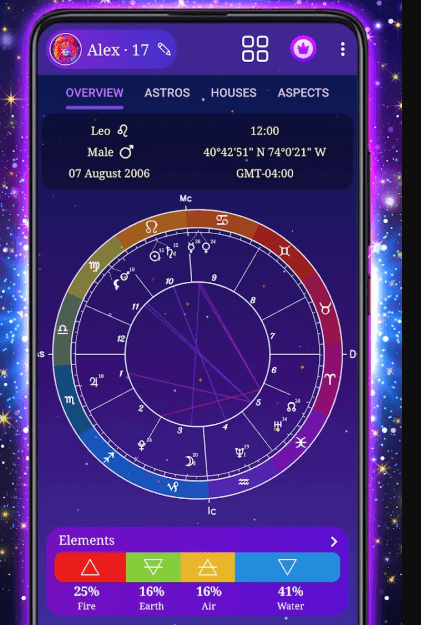
Users get a clear interface to enter their birth date, time, and place to generate a complete astrological chart.
The chart that’s generated shows planetary positions, houses, and signs based on standard astrological calculations.
In most apps, this chart becomes the reference point for other features such as daily predictions, compatibility readings, and long-term forecasts built from the same data.
2. Daily horoscope delivery

Daily horoscope delivery is usually built around the user’s sun sign or full birth chart.
The app generates short readings that change every day and presents them in a fixed format so users know where to look.
The horoscope updates are often found on the users’ home screen. It works best if they are part of a daily routine rather than a one-time interaction.
3. Compatibility analysis
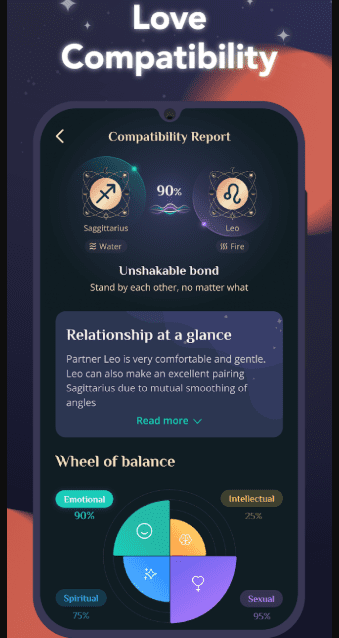
Compatibility analysis compares two birth charts to highlight areas of alignment and difference.
Users typically enter another person’s birth details or select a saved profile.
The results are displayed across areas like communication, emotional patterns, and long-term tendencies.
Many apps reuse the same underlying chart data here, presenting it through a different explanatory lens.
4. AI-Driven Insights
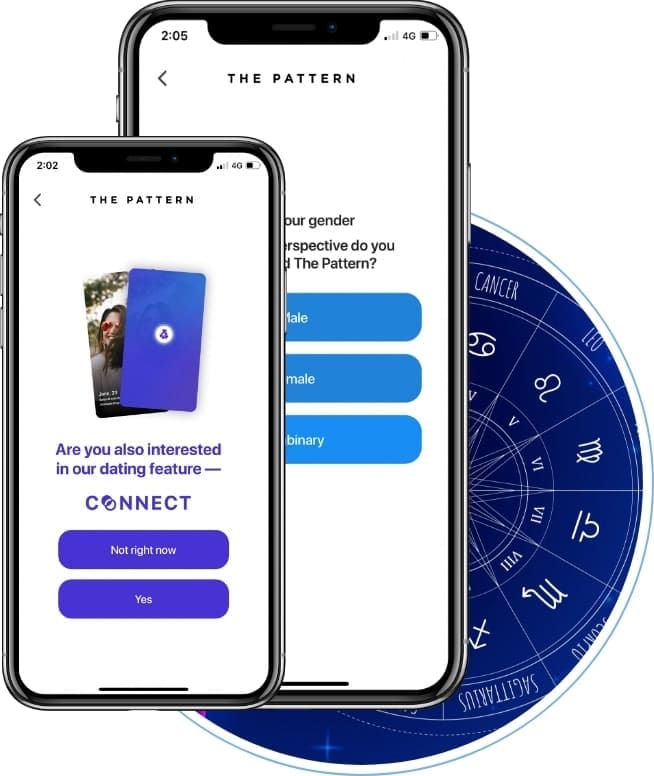
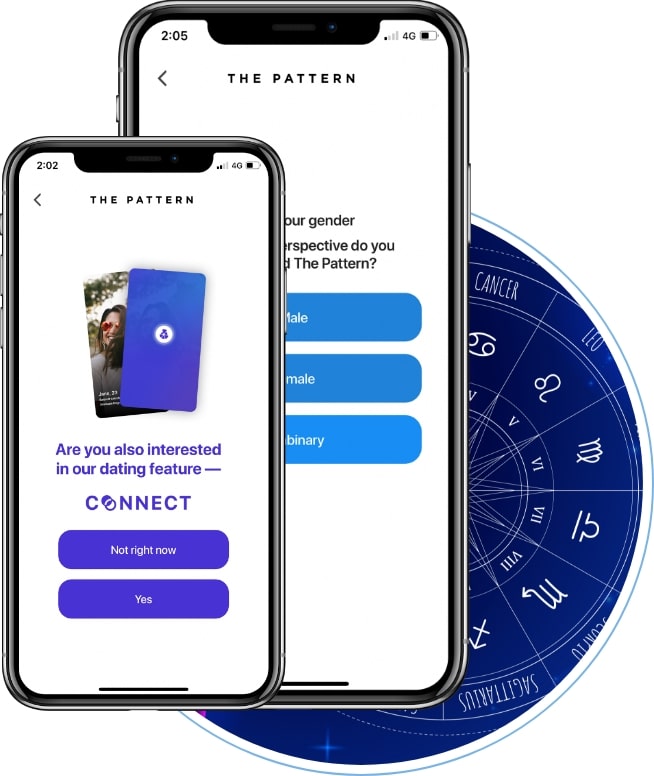
The Pattern, a popular AI-based app, has 8 million monthly active users. This is mainly because the app offers AI-assisted predictions that users find extremely engaging.
Apart from the basic sun signs, AI algorithms are able to process user data with vast astrological knowledge and generate detailed reports.
In fact, with AI, you will be able to reduce the “Barnum effect”, which is the human tendency to apply personal meaning to generic statements.
Since AI takes into account individuals’ unique data, users appreciate the hyper-personalized insights and guidance.
5. Live astrologer consultations

Some apps include the option to speak with astrologers through text or calls inside the platform.
Sessions are usually booked through a scheduling interface that shows availability and pricing upfront.
Conversations are stored within the app so users can revisit them later. This setup allows one-to-one guidance without moving to external messaging tools.
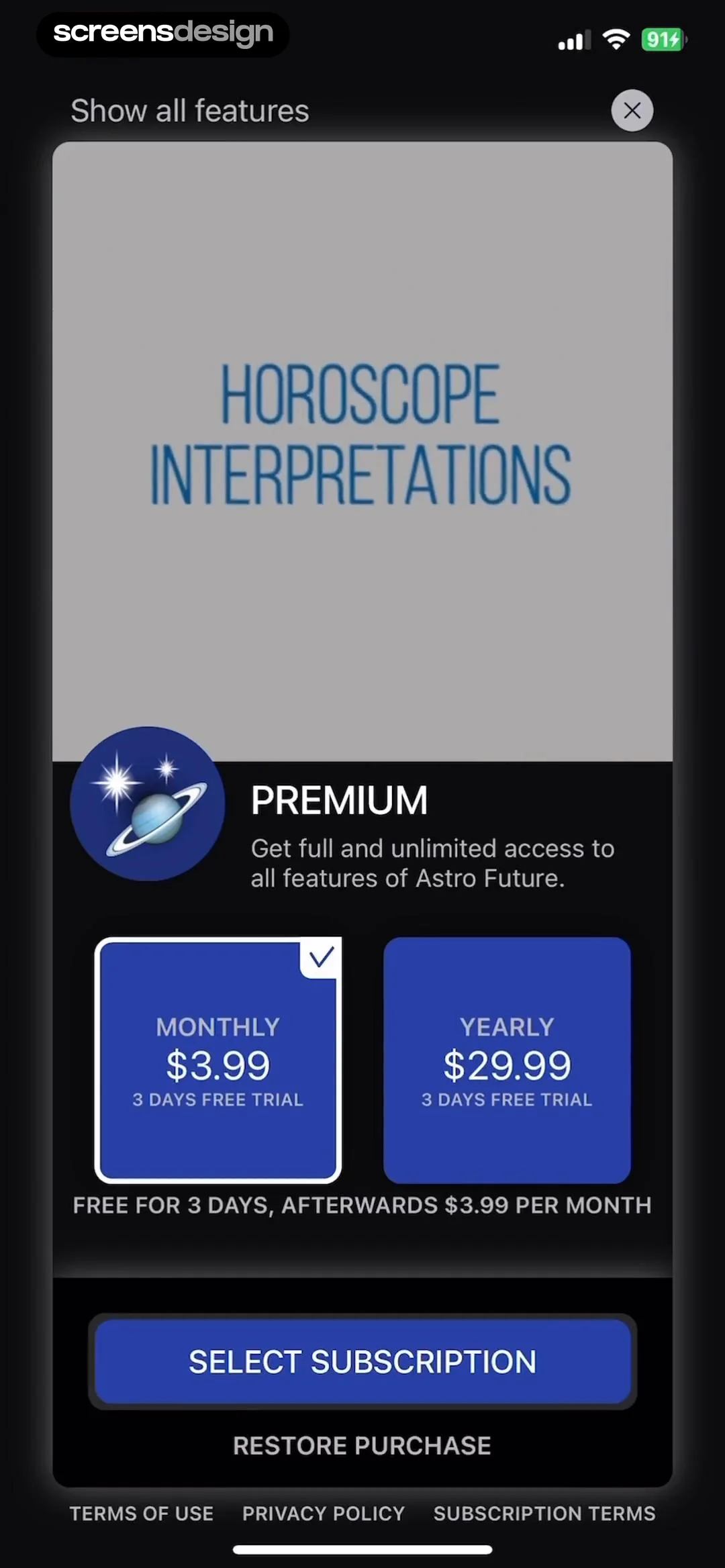
6. Subscription and payment system
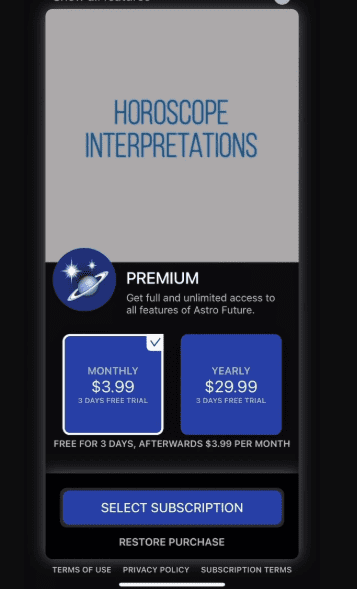
It’s common for astrology apps to offer access to advanced charts, extended readings, or consultations through subscriptions or one-time payments.
When the pricing is displayed clearly inside the app, then users can easily manage their plans through account settings.
Since the payment processing is integrated directly into the platform, all purchases and renewals can take place without leaving the app environment.
Once you have done your research and have finalized the features you want for your astrology app, the hard part is done. And, it becomes much easier to pick the right team to handle the entire development process.
Mistakes to Avoid When Hiring Astrology App Developer

Now that you have decided to build an astrology app, it is best to find someone who has built one before.
You don’t want to waste your money, do you?
With that in mind, let’s look at some mistakes that businesses make while developing astrology apps.
1. Lack of Astrology-Specific Technical Experience
You may unintentionally partner with developers who have not worked with astrology APIs or calculation engines before. Unfortunately, they may misinterpret astronomical logic, leading to inconsistent outputs.
This calls for niche expertise, because astrology apps need accurate astronomical calculations and culturally relevant interpretations.
Developers without this background are bound to waste time testing and patching. It increases your costs and could possibly delay the launch date for your app. You need a team with proven experience in similar niche apps.
2. Ignoring Backend Scalability
If you hire developers focused only on front-end visuals, you risk backend systems that crash under heavy loads.
Suppose your app has features like live sessions or heavy chart calculations but it has poor backend planning. The app will experience quite a bit of lag and downtime.
Your app should be able to handle peak loads. Why? Because users will only use your app repeatedly if they find that the performance is reliable and smooth.
3. Neglecting Security and Compliance
According to a recent report by Enterprise Strategy Group (ESG), a staggering 62% of businesses suffered mobile app breaches in 2025. So, it’s clear that security is crucial to successful apps.
It’s best to implement data protection protocols during the development phase.
Your team would have to apply advanced encryption, secure storage, and legal compliance like GDPR. If not, you would expose users’ data and also subject your business to financial and legal consequences.
4. No Post-Launch Support Plan
Post-launch support needs to be part of your build package. It wouldn’t be wise to compromise on this.
This is because there are certain aspects like bugs, OS updates, and user feedback that require ongoing attention.
Without a dedicated team taking care of updates and maintenance, your user ratings will fall. So, make sure that your contract includes plans for support, enhancements, and even feature expansion.
5. Basing Choice Solely on Lowest Price
You will most likely get a mediocre product if you choose an astrology app developer solely because of low prices. Apart from that, there would also be hidden costs and project delays.
You may think you are saving a few thousand, but it can end up costing you tens of thousands later.
Sure, a more experienced partner may cost more upfront, but the fact is that they can deliver a product that ensures high adoption and ROI.
Final Thoughts
Most other apps are not built around belief, habit, and emotion. Astrology apps are unique in that regard. Even the typical target audience for these apps includes people who are reflective, curious, and sometimes even anxious.
It’s no wonder then that apps like Co–Star, The Pattern, and AstroTalk thrive. They cater to the precise needs of their users and offer hyper-personalized experiences.
Have you decided to build an astrology app? You can partner with Webskitters, the top astrology app development company. We can turn your idea into a high-performing app that users will love.
Get in touch with our expert app developers to get started with your project.
Frequently Asked Questions
How long does it take to build an astrology app?
Building an astrology app usually takes two to six months for a standard version. If you add AI-driven insights, live consultations, or complex personalization, it can stretch to twelve months or more.
What mistakes to avoid before hiring an astrology app developer?
The biggest mistake is hiring developers who treat astrology like any other app. Lack of domain understanding, weak backend planning, and no post-launch support often cause long-term issues.
What is the cost of an astrology app?
A basic astrology app generally costs between $30,000 and $50,000 in the U.S. market. Feature-heavy apps with AI, chat, or video sessions can go beyond $80,000.
What are the features of astrology app development?
Most astrology apps include birth chart calculations, personalized predictions, daily updates, and compatibility insights. Advanced versions add AI interpretations, consultations, payments, and secure user data handling.

 UI/UX Design
  Web Development
  Mobile App Development
  Internet Of Things
  Game Development
  Artificial Intelligence
  Digital Marketing
  Data Science Consulting