 April 6, 2026
 The current US-Israel-Iran conflict is more than a major geopolitical event of the decade. It’s not just another conventional war but a trade-centric one. The conflict has ramifications that transcend the political landscape; it has a massive effect on the global supply chain.
And, an effective supply chain management is the need of the hour for any business. The West Asian war highlighted the importance of mitigating supply chain disruptions for businesses.
But what’s really happening that is leading to such supply chain disruptions?
The Strait of Hormuz blockade due to the Iran–Israel conflict has disrupted global shipping, causing delays, higher costs, and rerouting of cargo. This disruption creates a domino effect, impacting multiple industries, including oil, pharmaceuticals, electronics, and agriculture, not just energy. AI can help reduce these risks through predictive alerts, automation, and smarter decision-making. However, current systems still have limitations in execution and data integration.
Do you want to explore more? Let’s start with the reason for the global supply chain disruption.
How is the Iran-Israel War causing a Major Disruption in the Global Supply Chain?
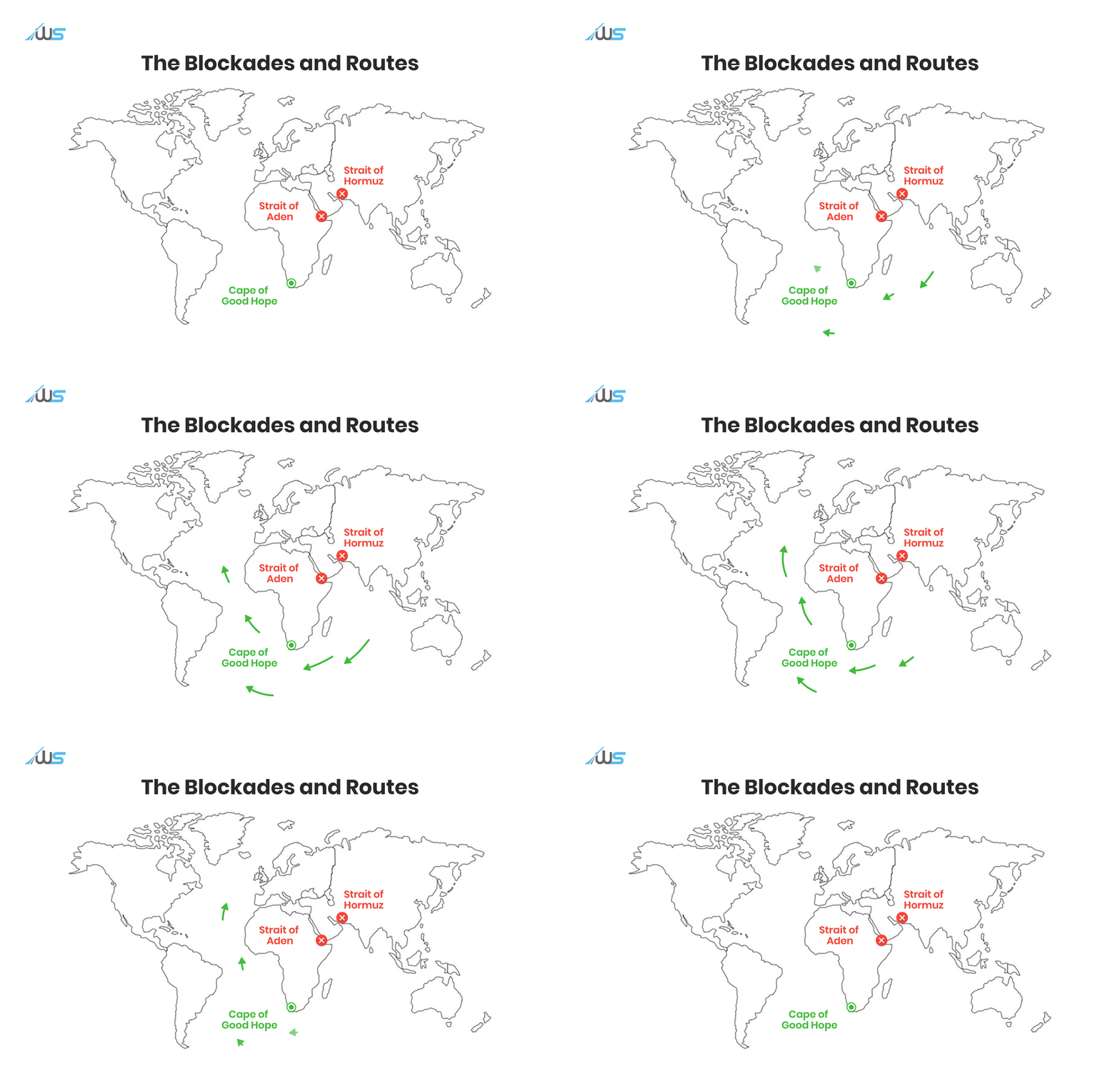
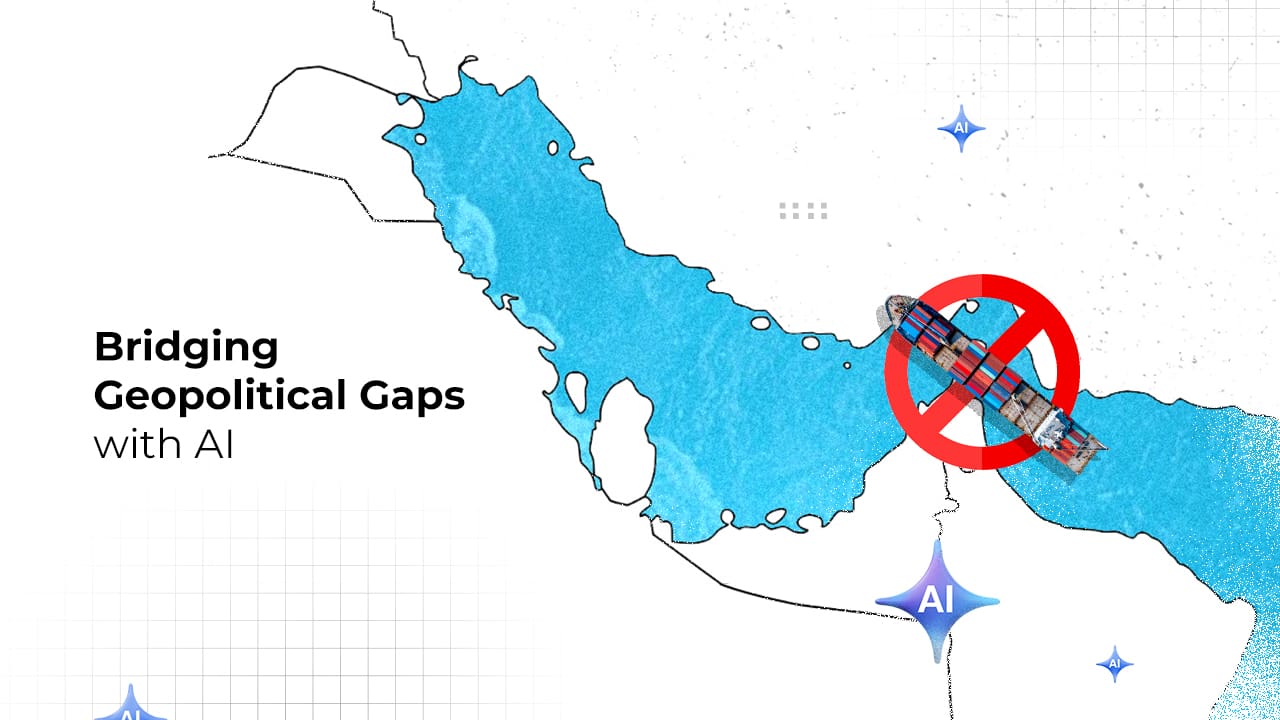
One drastic step that changed the dynamics of world trade was Iran’s blockade of the Strait of Hormuz. Following the Iran-Israel conflict, the country has restricted the movement of oil tankers through this strategic gateway.
This has led cargo ships in the Gulf to detour around the Cape of Good Hope (the southern tip of the African continent), resulting in significant increases in material costs and transit time.
But this disruption is not limited to energy supplies. Be it pharmaceutical supplies from India, semiconductor supplies from Asia, or oil-driven products (fertilizers) from the Middle East, everything is affected by this disruption.
According to Clarkson Research‘s estimates, 3,200 ships (4% of global ship tonnage) are sitting still in the Persian Gulf. Also, around 500 ships (1% of global ship tonnage) are stuck outside the Gulf in ports in Oman and the UAE.
The percentages may not seem like much of a hurdle to world trade. However, the matter is more complicated than that. Let’s explore more about this.
The Domino Effect
You have to understand something. The supply chain is like a line of cars, with one following the other. So, if one car gets stuck or gets derailed from the chain, it affects every car in the train.
This is known as the domino effect. Even if one ship gets stuck in a port, the entire shipping movement is affected. This will disrupt the global supply chain. So, it doesn’t matter whether a given percentage of cargo ships are stuck inside or outside the Persian Gulf; the global supply chain ought to be affected by this conflict.
The system is so volatile right now that the POTUS (President of the United States) has asked the U.S. International Development Finance Corporation to provide enterprises (especially those dependent on oil) with political risk insurance at low cost.
What is Political Risk Insurance?
Political risk insurance is coverage that protects organizations against market volatility caused by political conflicts, violence, or government actions.
This is indeed the need of the hour for companies that deal with oil, oil-driven materials, or energy. As almost 20% of the oil comes from this region and the Strait of Hormuz is a major shipping lane, everything that comes from Asia and the Middle East could face significant delay.
The Houthi Angle
Apart from the Strait of Hormuz, the Suez Canal (Egypt) and the Strait of Bab-el-Mandeb (Gulf of Aden) are other major gateways.
But historically, the Suez Canal has been unstable due to the Houthis’ attacks. Recently, the Houthis joined the Iran-Israel war, posing a significant threat to the passage of ships from the Suez Canal and the Bab-el-Mandeb Strait.
For this reason, the ships now have to navigate all around the Cape of Good Hope to reach their destination. According to official estimates, this amounts to 1 million USD in fuel per ship, leading to additional costs.
Now the question is whether this disruption is limited to energy alone.
Is this Supply Chain Disruption Limited to the Energy Crisis Only?
No, the West Asia conflict isn’t limited to the energy crisis alone. The US-Israel-Iran conflict is triggering simultaneous economic shocks that reinforce one another.
The Economic Shocks
The global supply chain disruption due to the West Asian conflict is having ripples across almost every industry and domain worldwide. Let’s discuss some of it.
Logistics Bottlenecks
Wars change shipping behavior overnight. As insurance premiums for ships traveling through the Persian Gulf have surged significantly, some companies are suspending Gulf operations entirely.
It will be wrong to assume that this conflict has disrupted the ocean freight alone. It is also affecting air cargo networks. So much so that analysts estimate that around one-fifth of cargo routes (air) can face delays. This is because airlines tend to avoid conflict zones as much as possible and reroute.
When these logistics bottlenecks combine with shipping congestion, enterprises face an unpredictable schedule. The manufacturing industry becomes increasingly vulnerable during this time.
Raw Materials
There is no denying the fact that global supply chains depend heavily on Middle Eastern products. Be it fertilizers, plastics, or petrochemicals, everything relies on the hydrocarbon produced in the Gulf.
Even the BBC reports that in 2025, 90% of the energy supplies (oil and gas) were bound for Asia. So, the blockade of the Strait of Hormuz is expected to affect this region the most.
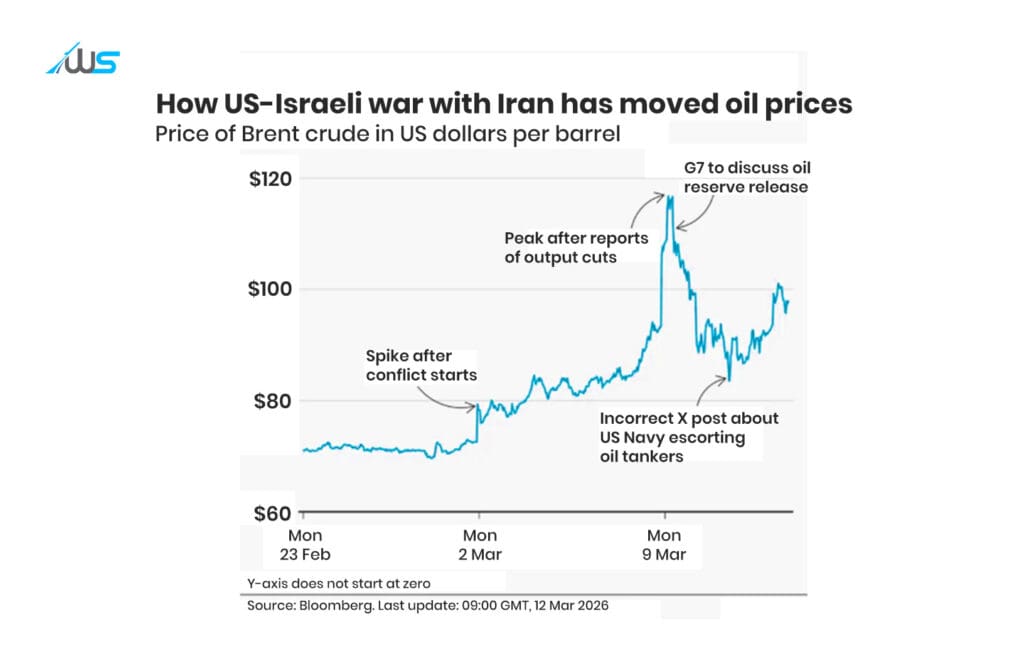
This graph shows how the war has affected oil prices worldwide.
A slowdown of these exports can affect manufacturing and agro-production simultaneously. Along with that, electronic components and pharma ingredients also get hit. This can lead to a drastic price increase in electronics, drugs, and other goods.
So, the war risks extend beyond the energy crisis into tech, automotive, electronics, healthcare, and other domains.
With that, we know how the Iran-US-Israel war affects global trade and leads to a supply chain crisis.
AI can be an answer to all these problems. Let’s see why they are stressing the proper usage of AI in times of crises like these.
How can AI help mitigate supply chain disruption?
Before exploring how AI can mitigate this global supply chain disruption, we need to understand the limitations of current AI systems.
The Current Limitations of AI Systems
AI’s Incapability to Execute
Enterprises today rely heavily on Gen AI and analytical tools to monitor risks of supply chain disruptions. These are the AI systems that help flag supplier risk, predict demand shifts, and summarize news events.
Despite all these, they can rarely provide the intelligence (operational) needed to handle a fast-paced geopolitical crisis. That’s because most of these tools behave like assistants. They assess historical data and report the findings. But these AI systems don’t execute actions to manage procurement workflows.
For this reason, these AI systems don’t work well during geopolitical disruptions. And, because of this, even if Iran blocks the Strait of Hormuz or cargo freights reroute themselves, the procurement teams have to:
-
Identify the problematic suppliers
-
Analyze contractual exposure
-
Take care of alternate options (sourcing)
-
Adjust new routes
-
Coordinate extensively with operations and finance
Most importantly, all these functions have to be performed simultaneously. And, traditional tools can’t handle these actions smoothly and seamlessly.
AI System and Fragmented Data
Another challenge with current AI systems is that they deal with fragmented data. Data such as logistics schedules, supplier information, or contract terms reside on different platforms.
Even sophisticated AI systems struggle to produce actionable insights when the data remains fragmented. As a result, enterprises continue to work with fragmented data. And it is no surprise that they have to rely on manual coordination during these times.
How AI Systems Can Help Enterprises Tackle Supply Chain Disruptions
Geopolitical shocks, such as the Israel-US-Iran conflict, will continue to test global supply chain resilience. And, the ongoing conflict continues to demonstrate how these disruptions have a ripple effect across all industries.
So, the enterprises must shift from reactive approaches to predictive and proactive approaches. There are several ways to do this using AI.
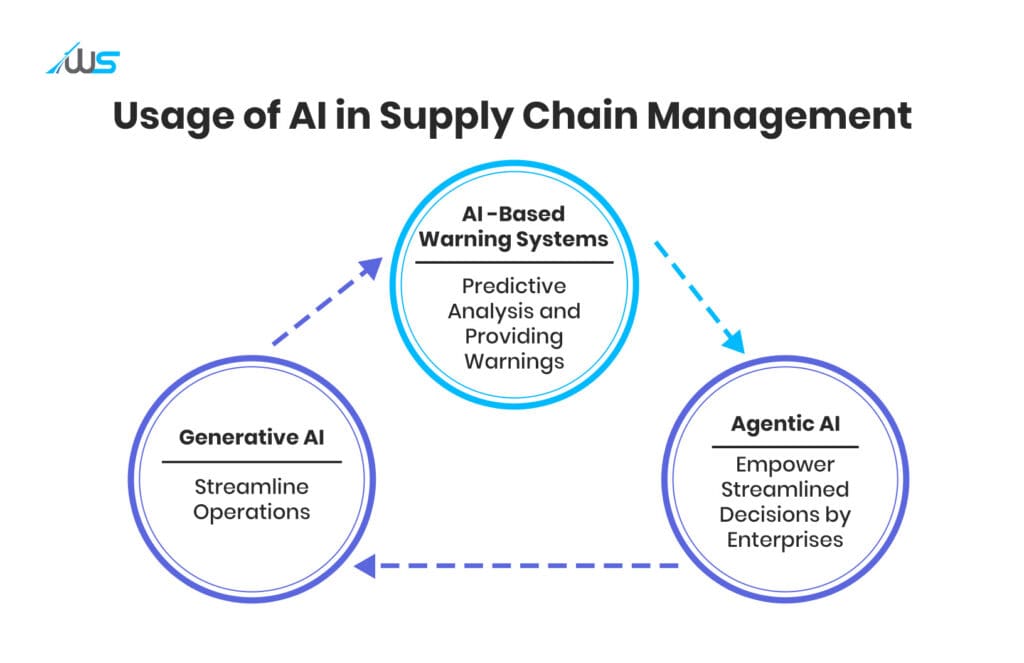
1. AI-Based Warning Systems
AI-based warning systems are highly effective at predicting and issuing warnings to support predictive risk management.
These AI systems not only assess real-time data like weather events, logistical bottlenecks, and geopolitical shocks and identify issues in advance, but also send warning alerts to mitigate the consequences of these threats.
This allows organizations to take preemptive mitigation measures, such as rerouting shipments or switching suppliers. These forecasts reduce the damage substantially.
Learn More: 2,800 Elephants Saved by AI-Based Warning System – Can India’s AI Do More?
2. Agentic AI
Another way AI can help is by empowering decision-making across the entire process, from source to payment. Agentic AI can help companies do this effectively.
Agentic AI platforms can analyze supplier networks, commodity markets, geopolitical signals, and shipping routes simultaneously. Instead of just generating reports, these agents trigger autonomous workflows.
3. Generative AI
Despite all the limitations of Gen AI, organizations can use platforms like ChatGPT to streamline supply chain operations. This can improve speed and minimize manual tasks. Some examples include:
-
Route planning automation
-
Shipment updates
-
Verification and generation of documents
-
Warehouse layout optimization
-
Stock replenishment automation
-
Supply chain data analysis
Is AI the Solution to Supply Chain Crises?
Conflicts don’t just alter geopolitics but also affect world trade (through supply chain disruptions).
The US-Israel-Iran conflict shows how sensitive the world trade networks are. When critical checkpoints are choked, energy flows and logistics corridors are disrupted.
Organizations that depend on fragmented AI systems and manual tasks can struggle. They may not proactively respond to this crisis. On the other hand, enterprises that adopt Gen AI, Agentic AI, and AI-based warning systems can gain advantages that transcend the power of automation.
Do you want to learn more about AI and how your enterprise can be crisis-ready? We are here to help.
Book a call with Webskitters and manage these crises head-on!

 UI/UX Design
  Web Development
  Mobile App Development
  Internet Of Things
  Game Development
  Artificial Intelligence
  Digital Marketing
  Data Science Consulting