

 April 26, 2026
 Have you ever found yourself browsing Amazon’s website and then proceeding to buy something you had not planned on buying?
It was not random and is most likely because you saw high-resolution product images, a prominent ‘free shipping’ copy, or even a bunch of trustworthy reviews. That is Conversion Rate Optimization at play. And, it a key part of your overall digital marketing strategy.
The average conversion rate for websites is 2.35%–3.68% across industries. That means that 3–4 out of every 100 visitors complete a purchase on a site. But you would have to check your industry’s specific benchmarks before creating your CRO strategy.
Before getting to the tips to conduct CRO, we will first gain a brief idea of what it is and why it is vital to your online presence.
What Is Conversion Rate Optimization?
Conversion Rate Optimization, or CRO, is a strategic process of enhancing your website or landing page in a way that increases the percentage of visitors who perform desired actions.
Depending on your business, this could be anything from buying a product to subscribing to a service to filling out a form, and so on.
Through this step-by-step method, the website traffic you already get turns into more customers.
The end goal of website conversion optimization is to maximize business revenue and growth by converting the already existing traffic into loyal customers.
The process is conducted on the basis of insights from website data. CRO ensures that web pages, content, and CTAs (calls-to-action) are optimized, resulting in the highest conversions possible by removing all types of friction from the website.
People tend to get confused with Search Engine Optimization and Conversion Rate Optimization, so let’s clear that up.
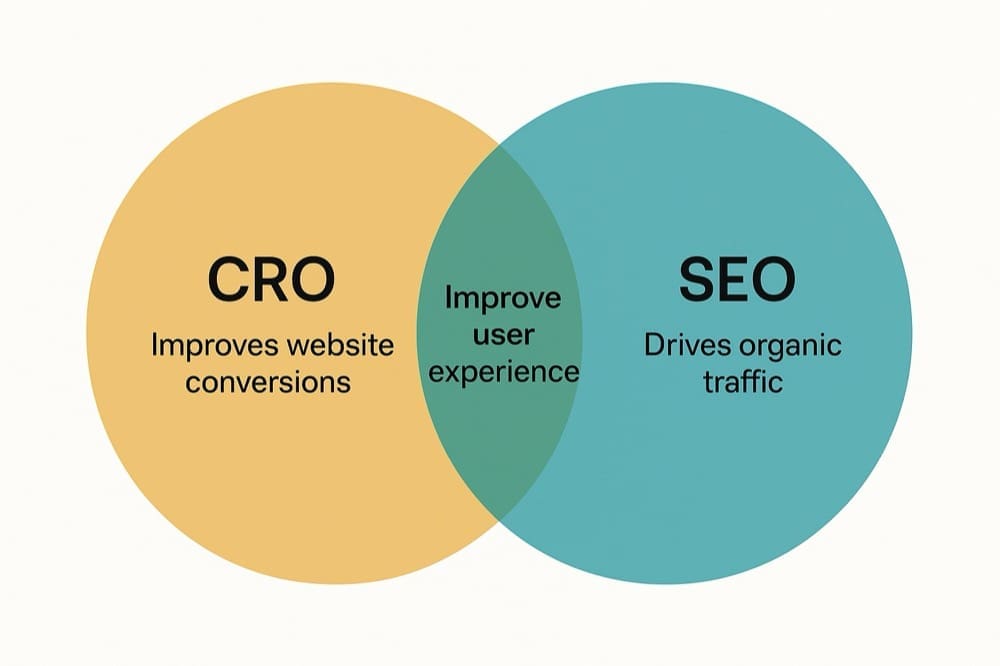
While the goal of SEO (Search Engine Optimization) is to boost traffic to a website, the goal of CRO (Conversion Rate Optimization) is to increase the chances that visitors will take an action on your site or landing page.
So, it’s obvious that both these strategies will have to be put into play if you expect to see positive results.
The trick is to ensure that the KPIs of both SEO and CRO strategies take into account the entire customer journey.
Why is Conversion Rate Optimization important?
Very often, the focus remains on generating more and more traffic without ensuring that those leads actually convert into leads or paying customers. This is why website conversion rate optimization is extremely vital, as it both decreases your customer acquisition costs and increases your revenue per visitor.
Imagine that you own an electrical services business.
Before CRO: 10,000 monthly visitors
2% Conversion Rate = 200 sales.
After CRO: 10,000 monthly visitors
3% Conversion Rate = 300 sales.
Basically, you achieve a 50% increase in sales without even spending more money on marketing to acquire new visitors.
Websites with CRO Vs websites without CRO
Did you know that Walmart Canada once removed the ‘View Details’ button for out-of-stock products and experienced a boost in conversions?
Sounds insignificant, but that’s what CRO has the power to offer.
Have a look at what you can expect from a website with and without CRO.
| WITHOUT CRO (Unoptimized) | WITH CRO (Optimized) | |
|---|---|---|
| Entry | User visits a website | User visits a website |
| Understanding | Unclear messaging | Clear, relevant messaging |
| Navigation | Confusing journey | Simple, guided journey |
| Action | Exits site / no action | Completes desired action |
| Outcome | Low conversions, lost revenue | Higher conversions, growth |
How to Conduct Website Conversion Rate Optimization
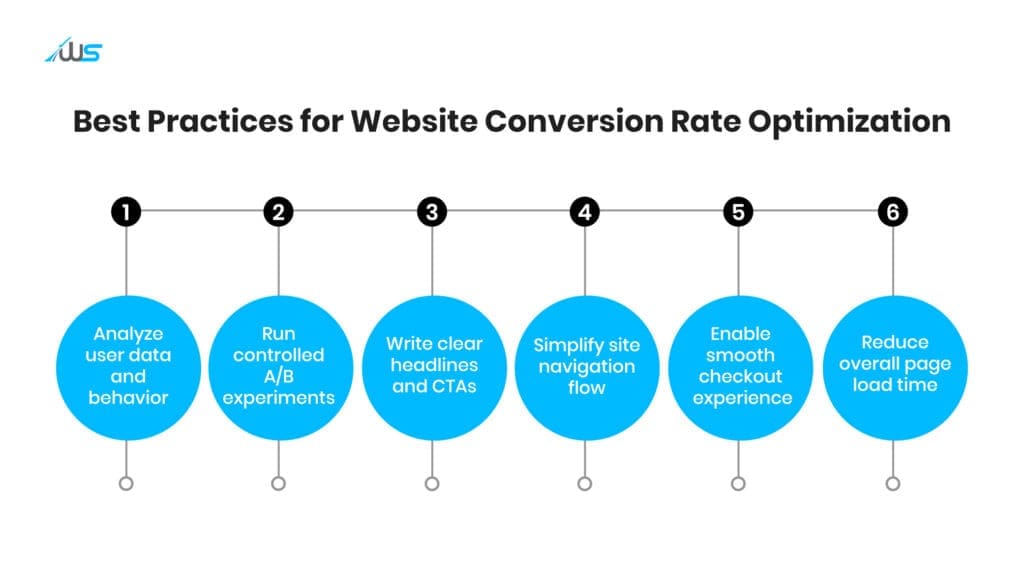
Your conversion rate optimization plan would have to ensure ongoing testing so you can figure out the most effective combination of elements for your website.
To make sure consistent conversions on your website, there are several proven tactics you can use.
1. Analyze your data
What is your current conversion rate? To find out, you can use a tool like GA (Google Analytics.
So, suppose in the past year, you got a thousand website visitors and had 10 sales. This means that your site’s conversion rate for that year sits at 1%.
The formula for conversion rate is:

GA also allows you to identify which pages suffer from low conversion rates. You may find a page with high traffic but little to no conversions.
There are heatmap tools like Hotjar that allow you to learn exactly how people are interacting with your page (both scrolling and clicking behavior).
Visitors to your site may be clicking on non-clickable elements or some of them may be scrolling past your contact form.
Insights like these can inform and enhance your website’s performance
2. Conduct A/B tests
Here, you will test the original version of your site in comparison to an updated version of the site. It’s best if you test only one change at a time. You can update the location of influential pages, elements like:
-
Page colors
-
Page copy
-
Images used
After you identify what you want to change, you can use the Google Optimize tool and run an A/B test. Tweak the key page elements to test whether a higher number of users respond to the old version or the new version.
In case the updated version gets more interaction, maintain it. You may also want to consider whether the changes on one page will work on other low conversion pages.
3. Use strong H1 and CTAs
Someone who lands on a page without an H1 at the very top is likely to consider it irrelevant, though it may actually have something valuable to offer.
A wasted opportunity.
The H1 of your web page is its headline, so it needs to grab attention and tell users exactly what the page is about. So keep it clear, punchy, and packed with the main keyword you are targeting with each web page.
Now, right underneath a clear H1, it’s important to include a clickable call-to-action or CTA. CTA buttons direct visitors to their desired destination. So they need to be eye-catching and action-oriented. Use phrases like:
-
buy now
-
sign up today
-
get your free trial
For best results, the CTA of a page should be placed above-the-fold (the part of the website visible before scrolling).
4. Simplify the navigation
There’s this unofficial rule that says visitors should be able to reach what they need on your website in just three clicks.
While this may be an arbitrary rule, it does contain a grain of logic if we consider how quickly people get frustrated if they have to do more than they need to do.
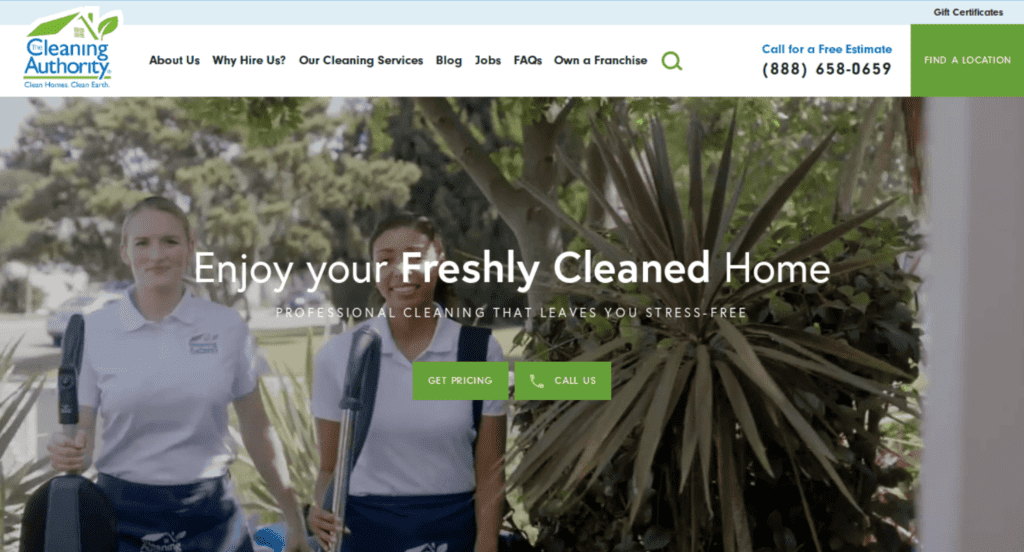
This is why the navigation menu needs to be well-organized and reflect the visitors’ main requirements. If someone runs a local business (like the one you see below), the navigation would necessarily need to have menu options like services, location, contact number, pricing, and so on.
According to Design Rush, mobile commerce currently accounts for approximately 59% of total global e-commerce sales. So, the mobile version of your navigation must be responsive.
5. Offer a painless checkout process
A website’s checkout process must always aim to offer a quick and painless experience. You have definitely experienced how frustrating they can be, right?
The key is fewer steps, ‘guest’ checkout options, and so forth.
If you notice the checkout process of optimized sites, they tend to have a single-step layout, autofill, and various payment options available for visitors.
Additionally, certain trust signals go a long way in making shoppers feel secure. This could include:
-
Third-party security brands (Norton/Symantec, McAfee, etc.)
-
Reviews and ratings
-
SSL certificates
-
Well-known payment logos
6. Decrease page load time
BigCommerce reports that just a one-second delay in page load time can lead to a 7 % drop in conversion rates.
Tools like Google PageSpeed Insights and GTmetrix allow you to check your page’s speed.
Technical issues like unoptimized images or high server response times can be detected and fixed promptly.
A study by Deloitte found that even a 0.1-second improvement in page load speed can increase conversion rates. The results were:
-
8.4% higher conversions in Ecommerce
-
10.1% higher conversions in Travel
-
3.6% higher conversions in Luxury
It is seemingly a very minor change, but it directly impacts how many users complete a purchase.
Increase ROI With Proven Conversion Rate Optimization Strategies
The aim of CRO practices is to drastically enhance the user experience of a website. Thankfully, there are several best CRO practices to encourage visitors to take desired actions.
What you need to do is create the perfect conditions for website visitors, and they will naturally convert.
Do you think your website is doing enough to guide visitors towards action? If not, Webskitters can help.
The experienced technical web developers will implement practical CRO strategies to increase your leads and sales considerably.
Tell us more about your project.
Frequently Asked Questions
1. What is conversion rate optimization (CRO)?
Conversion rate optimization is the process of improving a website so more visitors take action, such as making a purchase or filling out a form.
2. What is the difference between SEO and CRO?
SEO focuses on bringing traffic to a website, while CRO focuses on converting that traffic into leads or customers once users are already on the site.
3. Why is conversion rate optimization important?
CRO helps you get more value from existing traffic by increasing conversions, which directly improves revenue without needing to spend more on acquiring new visitors.
4. How do you conduct website conversion rate optimization?
To conduct conversion rate optimization, you need to analyze user behavior, identify drop-off points, test changes like design or content, and continuously make improvements based on what increases conversions.
5. What are common CRO techniques for websites?
Common CRO techniques include improving page speed, simplifying navigation, using clear calls-to-action, optimizing forms, and running A/B tests to see what performs better.
 UI/UX Design
  Web Development
  Mobile App Development
  Internet Of Things
  Game Development
  Artificial Intelligence
  Digital Marketing
  Data Science Consulting


