 May 20, 2026
 Most landing pages lose people. Unbounce reports that the average conversion rate across all industries hovers around 6.6%, but the businesses that strategically optimize their pages can more than double that.
For any team providing web design in Kolkata or anywhere else, it comes down to a handful of specific things on your landing page:
-
what you say
-
where it sits on the page
-
how easy it is for visitors to act on it
This blog covers all of it, from the core page elements of high-converting landing pages to SEO and A/B testing, with real landing page examples at each step.
What Is a High-Converting Landing Page?
In short, a high-converting landing page is a web page built around one goal, one audience, and one action.
It removes everything that does not help a visitor decide, and keeps everything that does. It speaks directly to what the visitor is already thinking, reduces the effort it takes to say yes, and makes the next step feel obvious.
But, unlike a homepage, it is laser-focused with one clear next step. The fewer decisions a visitor has to make, the more likely they are to make the one you want.
This web design Kolkata guide will show you exactly what you need to do to significantly increase your landing page conversions.
Main Elements to Build a High-Converting Landing Page
1. Headline
While 80 percent of visitors will read your headline, only 20 percent will read the rest of the page. This tells you where to spend most of your time writing.
A good headline is simple yet powerful. It tells the visitor what they will get and why it matters to them. And, of course, it should be similar to the ad or link that brought them to your landing page in the first place.
Typically, high-converting landing pages have headlines that clearly highlight a problem or something people want.
Plus, people should understand the offer in under three seconds. If you write a vague headline, people will leave before they even read the rest of the page.
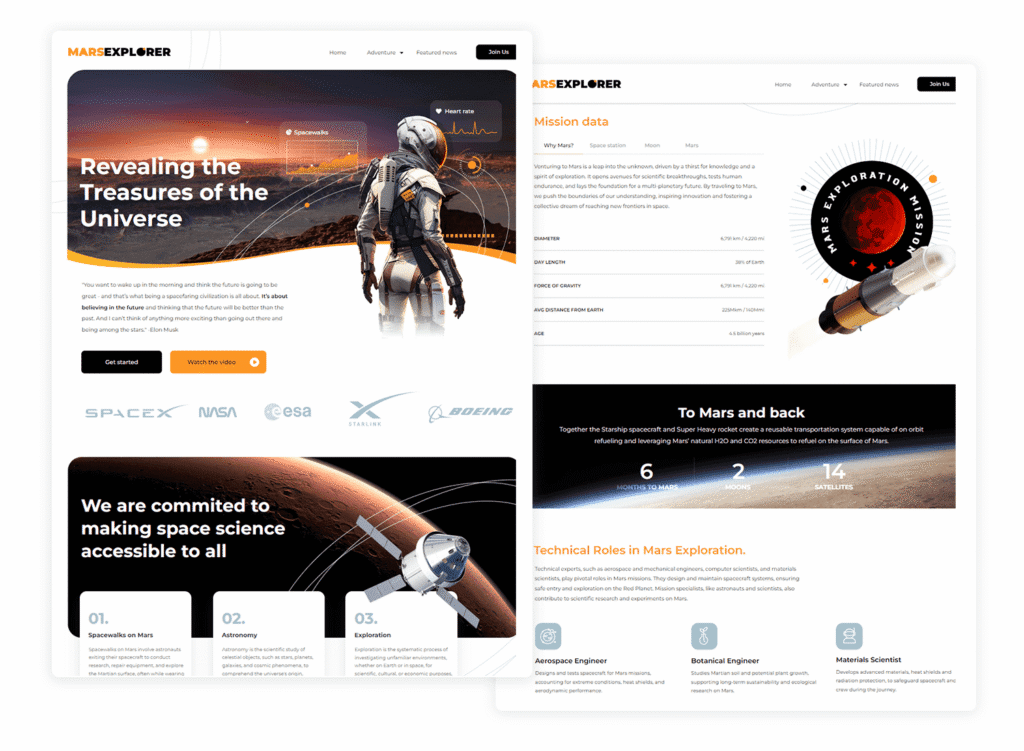
The Mars Explorer landing page offers a clear headline that highlights the mission’s goal.
2. Hero Image
The hero image is the thing a visitor sees usually before they read anything. It needs to show your product or service in a situation; it’s not just there for aesthetic value.You can consult professionals that offer web design in Kolkata for this.
This image is the thing visitors will look at so show them your product or service being used and make it easy for them to imagine themselves using it.
Suppose you use a generic image or one that does not relate to what your business offers. It will actually lower your chances of getting people to take action.
So, if you cannot explain the reason you chose a particular hero image, then you should probably replace it.
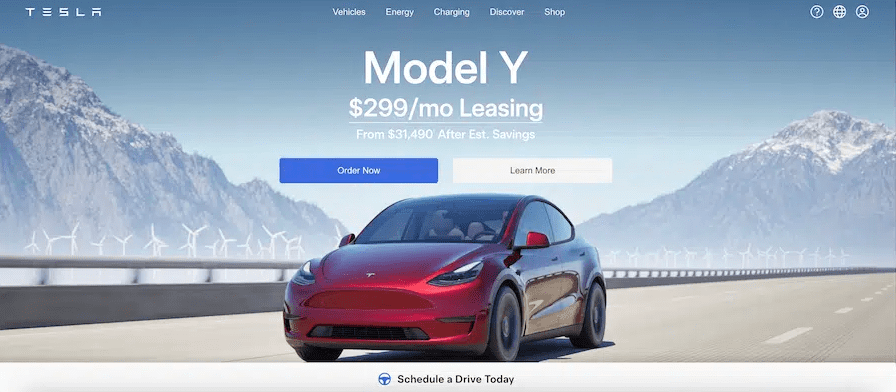
Tesla highlights their product in their LP in a clear and focused way.
3. Above-the-Fold Call to Action
The area of a landing page called ‘above-the-fold’ is simply what visitors see before they scroll down.
Your call to action or CTA button needs to be positioned here prominently in a bold color. Do not force visitors to search for it unnecessarily.
In case you didn’t know, LPs with a single call to action have a much higher conversion rate than those with several distracting CTAs.
Many businesses make the mistake of writing vague CTAs like ‘submit” or “click here”. The CTA text should say what will happen when visitors click it, like “start my trial” or “get my report”. This will make a big difference in how many people click.
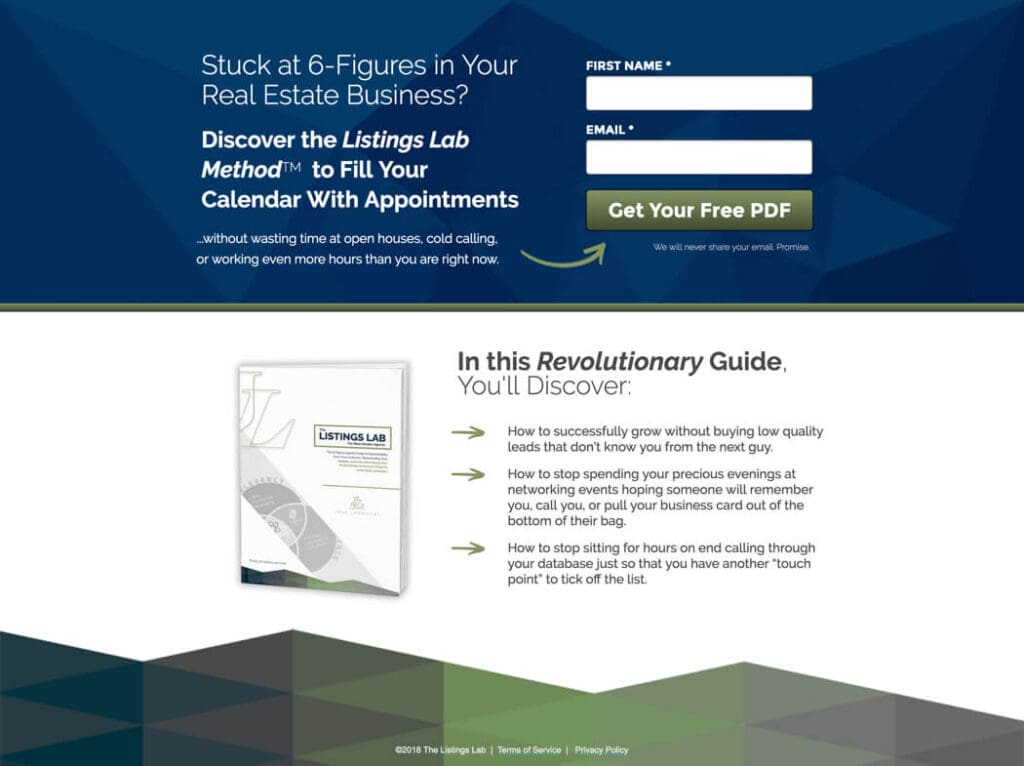
Listings Lab has designed a big and bold CTA that’s hard to miss.
4. Value Proposition
Visitors are likely to be considering multiple businesses, not just yours.
The question is, why should they pick yours?
Your landing page needs a compelling value proposition. Visitors need to quickly learn what they will get and why it is worth their time.
Both the header and subheader of the LP must bring out the value you offer, and they should relate to the problem or goal that brought the visitor to your page.
If what you propose to offer can also apply to any other company in your space, then your content is not specific enough. It should put a spotlight on your target audience and their particular situation.
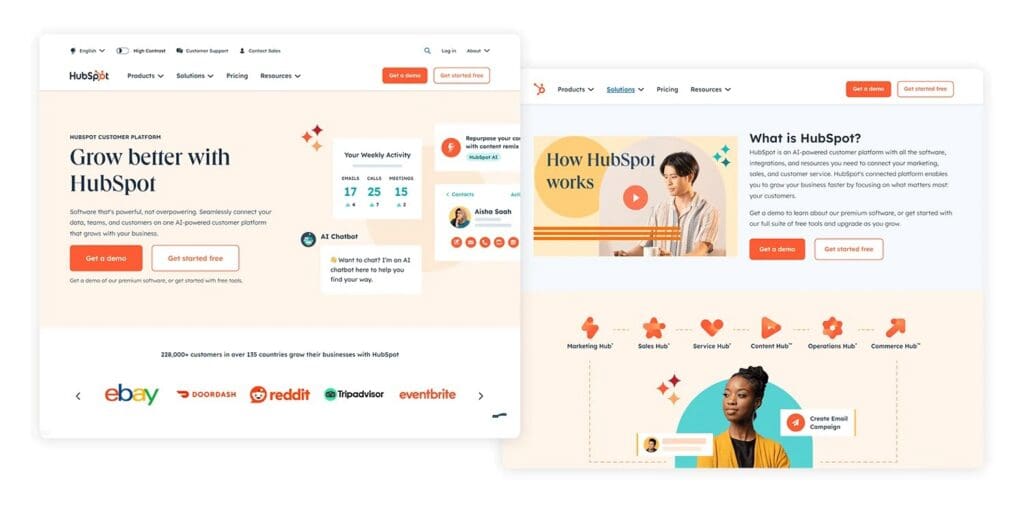
HubSpot effectively communicates its core value proposition to help businesses grow better with its platform.
5. Simple Form Field
Every field you add to a form is friction. Landing pages with five or fewer fields convert 120% better than those with longer forms. You must keep your forms short, since each extra field you add costs real conversions.
Restrict yourself to asking for what you actually need right now. If you just need an email to start a trial, do not push your luck by asking for a phone number and company size as well.
You can always collect more information later, once someone has already decided to trust you. Fewer fields also make the form feel less like a commitment, which lowers the psychological cost of filling it out.
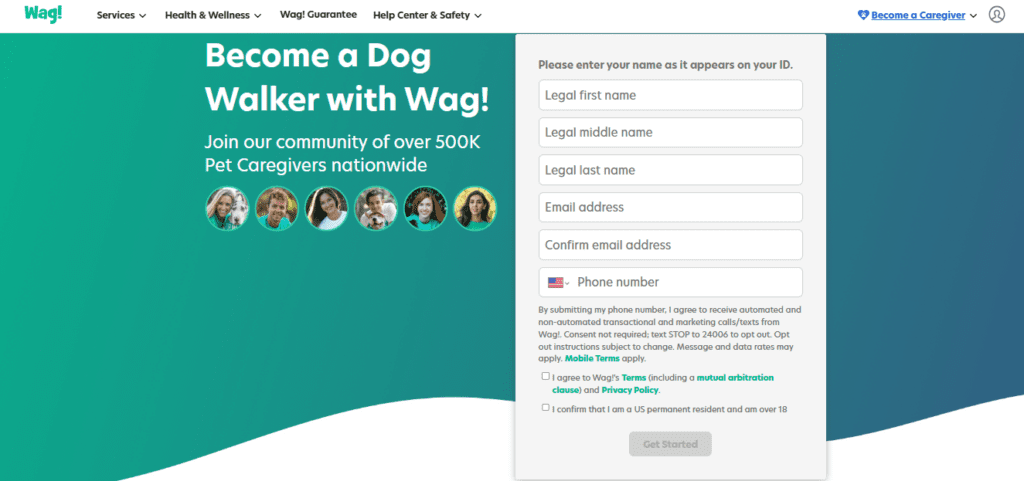
The form on Wag’s LP is prominently displayed and offers visitors a quick form to fill out, along with a QR code option.
6. Social Proof
Social proof can lead to high conversions. This is primarily because visitors tend to trust other customers more than businesses.
But not all social proof is equal. Testimonials need to counter actual objections, not just praise your product.
They need to be like credible witnesses, with photos, full names, professions, and examples of what you have done for them, not just marketing copy in quotation marks.
It’s pointless to use a generic “Great product!” quote from “J.S.”.
Now, a specific review from a named person who had the same problem your visitor has, and solved it using your product, does a lot.
Trust badges, review counts, and recognizable client logos all can help, but specificity is what converts.
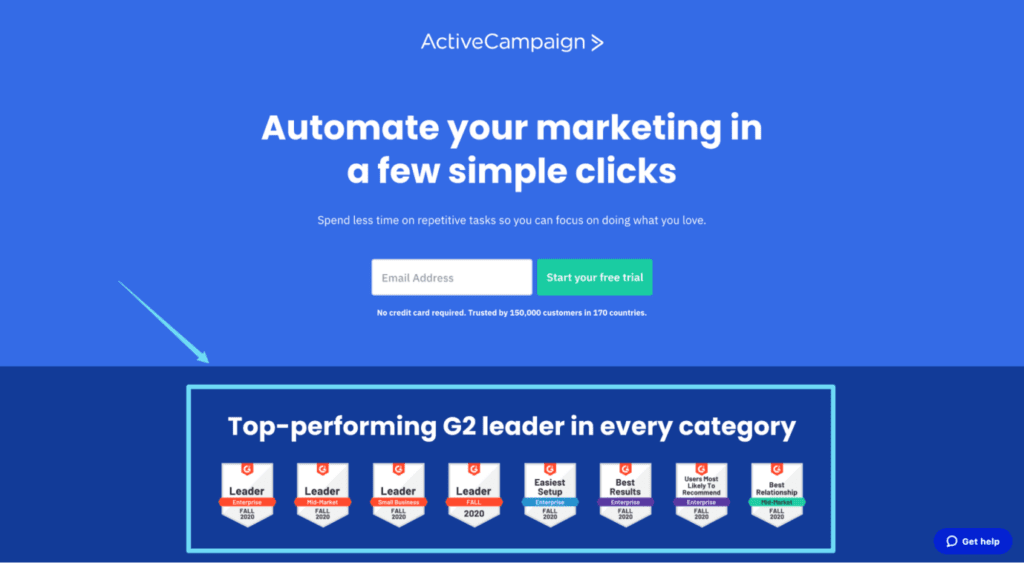
The LP of Active Campaign features several industry awards and badges that they have earned.
7. Mobile Optimisation
You have to take it for granted that a high number of your potential customers are looking at your landing page on their phones.
However, visitors using a desktop computer have a higher average conversion rate.
Why?
That gap exists because most mobile landing pages are not actually built for mobile; they are just desktop pages that happen to resize.
A mobile friendly web design ensures that visitors can easily navigate, read content, and take action regardless of the device they use. Since mobile traffic continues to grow, optimising your landing pages for smartphones is essential for improving user experience and conversions.
If you want to optimize landing pages for mobile devices, make sure that:
-
buttons large enough to tap without zooming
-
forms short enough to fill out on a small keyboard
-
copy is concise enough to read while scrolling

Twillory uses a stripped-down mobile-first version of its landing page.
What Is A/B Testing for Landing Pages?
A/B testing means showing two versions (A and B) of your landing page to different visitors at the same time, with one element changed between them, and measuring which version gets more conversions.
You change one key element and compare the two variants to see which performs better, so you can be sure of the cause and effect.
According to Leadpages, approximately 60% of companies run A/B tests on their landing pages.
It takes the guesswork out of decisions about landing page headlines, CTA copy, images, and form length. You run the test until you have enough data to trust the result, then keep the winner and test the next thing.
How to Optimise a Landing Page for SEO and AEO
The content included in your landing page will need to work on two fronts. It should be:
-
Content that caters to traditional search engine crawlers
-
Content that AI models like Gemini, ChatGPT, etc. can cite and recommend
Businesses investing in professional SEO services should ensure their landing pages are optimised for both traditional search and AI-driven search experiences. Here are some effective ways to optimise your landing page for SEO and AEO.
Use Natural Language That Answers Real Questions
Answer engines favor content that is authoritative and up-to-date.
Write your landing page copy the way a person would ask about your product or service. Include the actual questions your visitors have, and answer them directly on the page.
This helps both traditional search crawlers understand your content and AI models surface it as a direct answer to user queries.
Add Structured Data (Schema Markup)
For AEO, the most useful schema types include FAQ schema, product schema, and review schema, implemented via Schema.org.
Adding structured data to your landing page tells search engines and AI models exactly what type of content they are reading.
An FAQ section with schema markup is especially useful because it matches the format AI tools use when generating responses, making your page more likely to be cited.
Keep Your Technical Foundation Clean
A page that loads in one second has nearly a 40% conversion rate, but at three seconds it falls to 29%.
While page speed affects user experience, it also affects whether crawlers can fully index your page and how often it ranks.
Fast load times, proper heading hierarchy (H1, H2, H3), and mobile-friendly rendering are the foundation that both traditional SEO and AEO sit on top of.
Landing Pages that are Built to Convert
The fact is, most landing pages do not increase conversions, and you may have almost given up on the idea altogether.
But unlike your other marketing efforts, a landing page is the one place where you control the entire experience, you can match it exactly to what your visitor was looking for, and you can measure precisely where it stops working.
Do you need a professionally designed landing page that is built to convert?
Webskitters has a talented pool of web designers and digital marketers who understand what it takes to craft high-converting landing pages that work for your specific business and audience.
Frequently Asked Questions
Q1. What is a good conversion rate for a landing page?
A conversion rate of 10% or above is generally considered good, though the right benchmark varies significantly by industry and the specific goal of your page.
Q2. What is the difference between a landing page and a website?
A landing page removes all navigation and focuses visitors on a single conversion goal, making it 3 to 5 times more effective than a homepage for paid ad campaigns.
Q3. How many elements should a landing page have?
Landing pages with fewer than 10 elements convert at roughly twice the rate of pages with 40 or more elements, proving simplicity outperforms feature-heavy designs.
Q4. Does a landing page need SEO?
Landing pages are often campaign-specific and not primarily designed for SEO, though they can be optimized. Websites are better suited for building long-term organic authority.
Q5. How many CTAs should a landing page have?
Your landing page should have only one call to action. On longer pages, you can repeat the same CTA button multiple times, but all buttons must point to one single action.

 UI/UX Design
  Web Development
  Mobile App Development
  Internet Of Things
  Game Development
  Artificial Intelligence
  Digital Marketing
  Data Science Consulting