 February 19, 2026
 Everyone is talking about AIO right now. Does that mean SEO is dead? No, it’s not. It has just evolved. Artificial Intelligence Optimization is an emerging SEO technique. And, to make the best out of it for your small business, you have to get your search engine basics right.
We are here just for that!
If you’re starting out with SEO for your business, you might be wondering what Search Engine optimization is.
SEO is the process of optimizing your website to rank higher on search engines using strategies like keyword targeting, quality content, linking, and E-E-A-T practices. This article explains key concepts such as search terms vs. keywords, search algorithms, crawlers, indexing, and the difference between SEO (organic) and PPC (paid) under SEM. For small businesses, SEO drives long-term organic traffic, improves local visibility and conversions, and debunks myths like “SEO is free” or “SEO gives instant results.”
Intriguing enough? Let’s explore that and more.
SEO Fundamentals you need to know
SEO is one of the most important factors to consider if you are planning to launch your website (or even a social media profile). There’s no way to define everything we know about SEO without making it too lengthy.
However, you can check out our Comprehensive SEO Guide that covers the vital parts of SEO for businesses.
Right now, we will explain the most important Search Engine Optimization terms you need to know.
What is Search Engine Optimization or SEO?
Search Engine Optimization is the process of optimizing your website through various strategies to rank your website on Search Engines.
This is done through proper keyword usage, effective linking strategy, adherence to E-E-A-T practices, and so on.
Plus, there are other emerging SEO practices, like Answer Engine Optimization (AEO) and Generative Engine Optimization (GEO), that you must also consider in this era of AI-driven search.
Learn more: SEO Vs GEO: The Ultimate Battle for Web Traffic Dominance.
The next things to know are the terms associated with the online search itself.
What is a Search Term?
A search term is the exact word or phrase that a user enters into search engines (Google, Bing, or Yahoo Search) when they look for information online.
Do you remember the last thing you Googled? That’s a search term. Anything and everything you type on Google to find something is a search term.
There were more than 5 trillion searches on Google in 2025. So, can your business target all these search terms individually? Is it impossible?
Yes, that’s where keywords come into the picture.
What are Keywords?
Keywords are specific terms that businesses target and optimize for their content.
Sometimes the search terms and keywords are the same. But, most of the time, they aren’t.
Synonymous terms often trigger matches. For instance, if we search “Best biodegradable sunscreen”, then we have the following result.
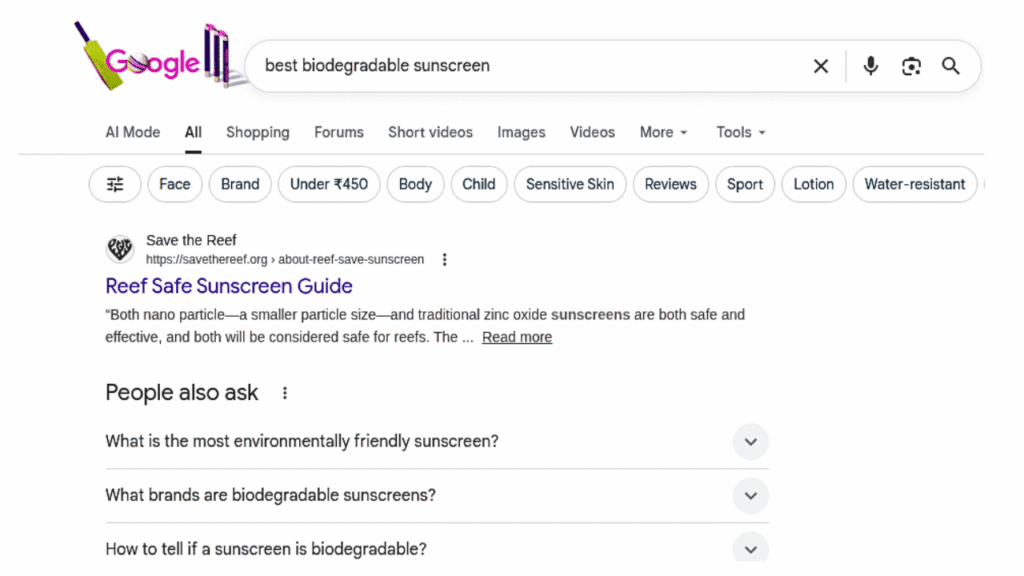
Can you see how “Reek Safe” has been given instead of the search term “Biodegradable”? It is because the search intent has been prioritized instead of an exact match.
In SEO, keywords are terms used to target relevant topics rather than exact matches.
Users type what comes to their mind. They don’t care about the precise keywords. Their only intention is to get their questions answered.
If you target your content with the keywords, your business will appear to them.
In a nutshell,
Search Terms ≠ Keywords
Search Terms = Users
Keywords = Business
Now that we know about search terms and keywords, we have to look at how search engines work and the terms associated with them.
What is Search Algorithm?
A search algorithm is a set of complex rules used by Search Engines like Google to assess content quality and determine its ranking on search engine result pages (SERPs) when a user asks a question.
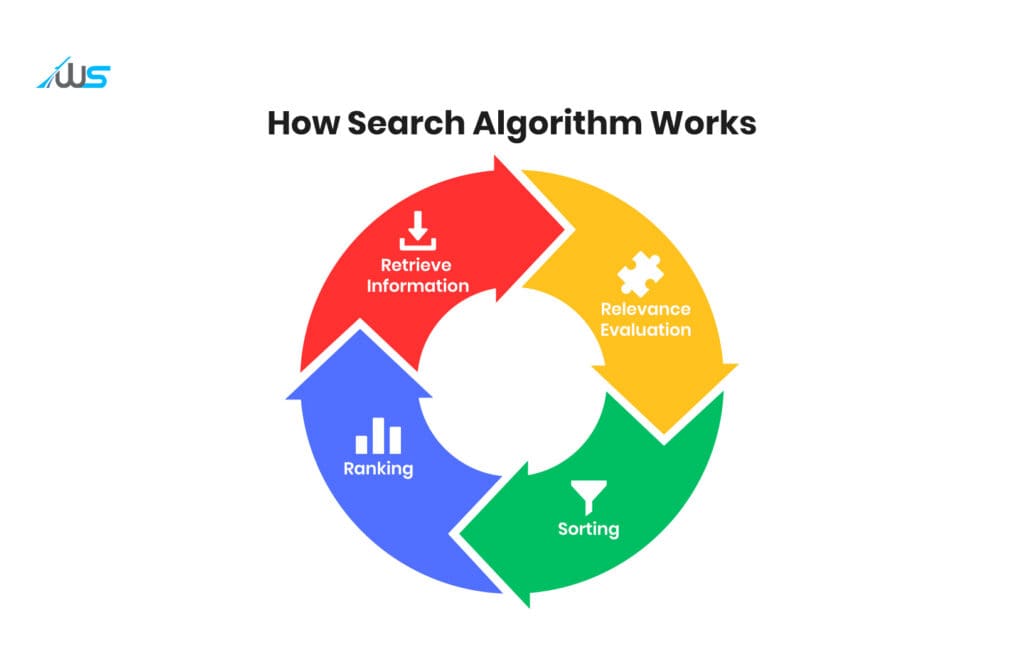
But the next question is how search engines retrieve information based on relevance. The answer is Search Engine Crawlers.
What are Search Engine Crawlers?
Search engine crawlers are scripts or programs that automatically browse web pages to Index.
These crawlers are also called Spiders or Bots.
Search Engine Crawlers read pages and then store the words found on the page. They also identify the location of the words, along with usability data such as HTTP errors and page load speed. All this data is stored on the Index (web page databases).
What is Indexing?
Search engine indexing is the process of organizing information for search engines before searches, enabling super-fast answers to user questions.
That’s because going through specific pages for topics and keywords will be time-consuming. So, search uses indexing to retrieve and rank information. The primary objective of search engine crawlers is to index pages.
All these fundamental processes constitute how search engines primarily work. Hence, Search Engine Optimization is about identifying these processes and improving your strategy to make your content rank higher in search engines like Google.
We have seen that businesses get confused between SEM (Search Engine Marketing) and SEO (Search Engine Optimization). Let’s confront that question.
Is Search Engine Marketing and Search Engine Optimization the Same?
No, Search Engine Marketing and Search Engine Optimization aren’t the same. SEO is certainly a subset of SEM.
While Search Engine Marketing is the process of promoting a business on search engines through paid and unpaid methods, SEO focuses exclusively on the unpaid, or organic, approach.
SEM can be further categorized based on the nature of the approach:
- SEO: Search Engine Optimization is the process of promoting businesses organically by optimizing webpages. It generates organic traffic to your website.
- PPC (Pay-per-Click): Pay-per-Click is the process of generating traffic for a business through paid advertising. PPC involves setting up campaigns and paying the search engine to run them.
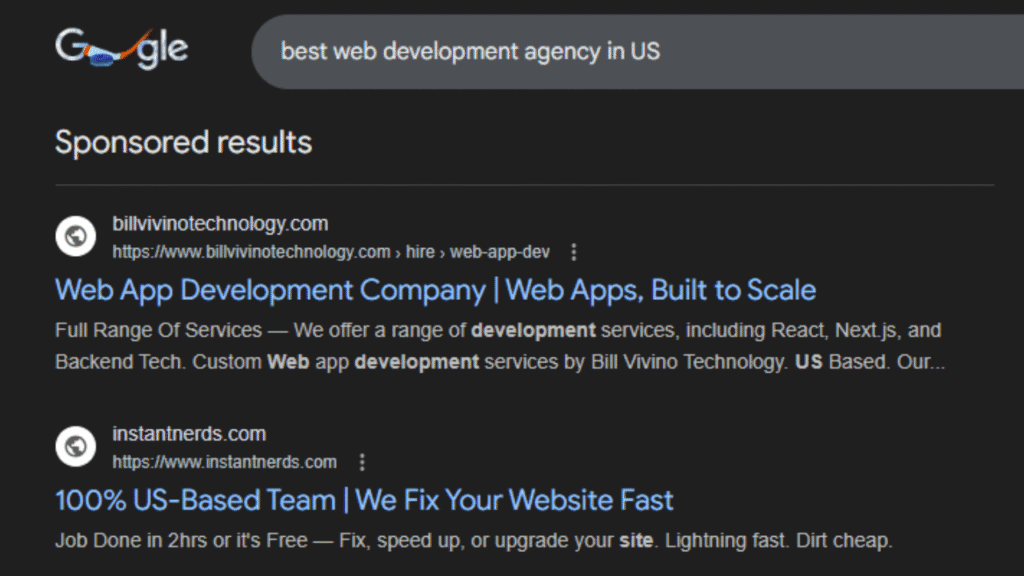
These “Sponsored Results“ are PPC campaigns. These businesses are paying Google to sponsor their visibility.
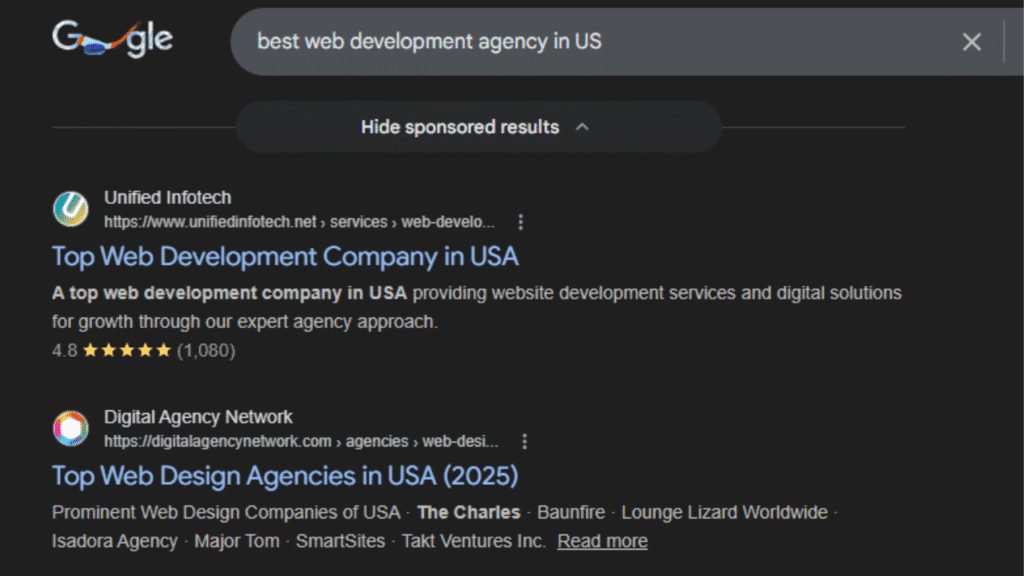
Just below the sponsored results, the organic rankings are visible. These websites are ranking because of SEO.
But which one of these two SEM approaches is the best? For that, we need to understand organic and inorganic traffic.
What is Organic Traffic?
Organic traffic is the set of users who come to your website through organic search results.
We won’t say that organic traffic comes free. But, aside from the costs of creation and maintenance, you won’t have to pay a penny to search engines.
Plus, organic traffic is a performance indicator for your business’s SEO approach. More organic traffic means more visitors, more prospects, and eventually more leads. If these leads convert, you can have sales.
Are there any Benefits of Organic Traffic?
Yes, there are many benefits to organic traffic for your business. Some (if not all) are:
- It is affordable (if not entirely free)
- Organic traffic attracts qualified prospects (meaning it attracts visitors to your website who are interested in your services or products)
- It gives you a chance to connect with your audience through content
- This type of traffic can provide a steady and constant stream of interested users to your website
- You can even scale the traffic by effective SEO and emerging content marketing strategies
Does Organic Traffic Have Downsides?
Yes, it has considerable downsides, too. If you have time constraints, it’s best to opt for PPC. Let’s discuss 3 main limitations of organic traffic that paid traffic can address.
- Investments: We have already told you that organic traffic is not entirely free. You need constant investment in content marketing and SEO to improve your visibility. However, its success depends on the quality of the content.
- Slower Growth: SEO is a long game. You cannot expect phenomenal success overnight. Its success comes with the strategy’s maturity. This requires consistent efforts. Time-constrained campaigns will not work here.
- Algorithm Volatile: The search engine algorithms update periodically. Reports state that Google alone has more than a thousand updates annually. And, organic traffic is highly dependent on these algorithms. So, you can’t strategize and formulate content and expect it to fend for itself; you have to optimize it periodically.
The Verdict!
There’s no clear winner in the debate between paid and organic traffic. It is just about the campaign’s objective.
If you want your campaigns to deliver an immediate impact, then paid traffic is the way to go. On the contrary, organic traffic can deliver long-term impact.
However, this momentary impact is often costly (in highly competitive sectors). Plus, traffic stops as soon as the ads’ duration expires.
So, time-constrained campaigns (like event promotions or festive offers) work best through PPC. But, if you have time on your side, it’s best to choose SEO.
We have talked a lot about the SEO foundations. It is time for us to explore what SEO means for small businesses.
How Important SEO is SEO for Small Businesses?
Small businesses have great market potential. And SEO is one of the factors that can make or break your business.
But why is SEO so important for small businesses? Why not traditional marketing approaches?
Why Small Businesses Should Focus on Digital Marketing?
Small businesses generally have resource and budgetary constraints. The business will indeed scale in the future, but you have to make that happen through effective strategies, don’t you?
We live in an era when almost everyone is online. A recent report showed that the number of internet users exceeded 6 billion in 2026. That’s almost 73% of the world population (8.2 billion).
As a business, you ought to be where your customers are. And, there’s no better place to be than the internet. This makes digital platforms (such as search engines and social media) the most effective marketing channels.
Furthermore, in traditional marketing approaches, you can’t target an interested audience. You just put your content through channels and expect your target audience to bump into it.
Targeting the interested segment can only be done through digital marketing.
By making your business accessible to anyone and everyone, you not only reach your target audience but also attract others. You build your brand presence, too.
And how do you target your audience online? Yes, you guessed it right. You do it by SEO and other digital marketing strategies. Not only that, you can achieve other things as well. Let’s discuss some of them.
What are the Benefits of SEO for Small Businesses?
1. Driving More Organic Traffic
Search Engine Optimization can help you drive more organic traffic if done correctly. This can be done by targeting the Keywords based on your target audience’s search terms when people search for products or services your business provides.
2. Attracting Prospects from Local Searches
If your small business has a physical storefront, you can reap significant SEO benefits. You can transcend geographical boundaries and ship your products globally through various delivery systems.
However, if your business is local, you can make use of local SEO. More often than not, people use “near me” searches to find products locally.
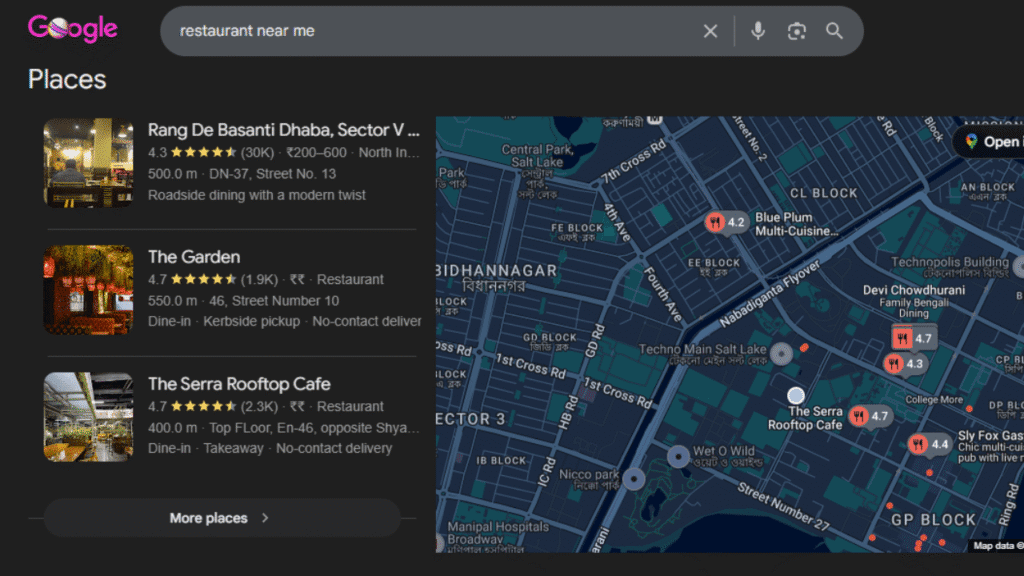
For instance, if you run a restaurant, people who type “restaurant near me” will never find your business if you don’t do Local SEO.
4. Better Conversions
Conversions are what turn your leads into clients. Having a fast, engaging, and smooth website means better conversions. But what does a website have to do with conversions?
Today, users have shorter attention spans. We have developed quick filtering mechanisms to handle the vast amount of content we encounter daily. This means that if your website isn’t quick or intuitive enough, you lose prospects. And, your competitor wins.
Better SEO leads to better user experience, which translates into better conversion rates. And, you should improve your conversion rates if you want to generate more revenue (more ROI) and scale effectively.
Myths vs Facts about SEO
Edgar Allen Poe once said, “Believe nothing you hear, and only one half that you see.” So, don’t just trust what people say about SEO; implement it and verify it yourself.
We will also debunk some common SEO myths you shouldn’t fall for.
Myth 1: SEO is only for Google
Although the term ‘SEO’ specifically includes ‘search engine,’ it has broader connotations (not just Google). Google is the most popular search engine with 89.66% of market share, but you shouldn’t focus all your efforts on it.
Today, search engines aren’t just Google, Yahoo Search, or Bing. It includes YouTube SEO, which lets you optimize YouTube content.
Social media platforms also incorporate basic SEO practices (keyword-targeting), which is known as Social Search Optimization (SSO). Social media platforms like Instagram and Facebook can be optimized efficiently with this.
Furthermore, you can also incorporate SEO for forums like Reddit and Quora.
All these techniques tell us that SEO isn’t just about optimizing content for Google.
Myth 2: SEO gives Instant Results
People often confuse SEO with SEM. We know that SEM includes both SEO and PPC.
While the organic traffic provided by SEO takes a long time (generally 6 to 12 months) to have an impact, paid traffic (PPC) can be instant and short-term.
SEO strategies are highly effective but time-consuming. Moreover, a consistent optimization process is needed to maintain content relevance across search engines and other platforms, given its long-term relevance.
Myth 3: SEO is Free
One of the most common misconceptions about SEO is that it is free. Although SEO is affordable, it is not free. Your business has to invest in resources to keep the content relevant and useful.
Along with content marketing efforts, you also incur costs for content maintenance and creation.
Myth 4: Keywords Matter the Most in SEO
Yes, keywords do matter in SEO. But keyword targeting is “one” element of a successful SEO. Even if we set aside emerging SEO strategies like AEO or GEO, other conventional SEO strategies, such as linking strategies, adherence to E-E-A-T guidelines, and others, do matter.
Read More: How to Build Topical Authority with EEAT to Boost Rankings
Myth 5: Write for Search Engines
It is well known that search engines like Google prioritize content that delivers an exceptional user experience. How to create such content?
You have to write engaging, relevant content that resonates with users. This will encourage people to go through the content and stay on your website. A conversational tone always works well for this.
You can even creatively present your solution in a way that evokes emotions in your visitors, which you can use to your advantage. Humor and storytelling also work depending on the context.
Learn more: The Blurred Line Between Human and AI-Generated Writing
Wrapping Up
The importance of SEO for small businesses can never be overstated. There are many ways Search Engine Optimization can help your business scale.
If you’re looking for long-term, solid growth, SEO is the approach. You can always run occasional PPC campaigns as needed, depending on your seasonal requirements.
And, you should steer clear of the myths that go around the market. Don’t trust what you hear or see. You have to experiment with the strategies and see the results for yourself.
However, if you want to get started with your SEO but don’t know how, Webskitters is here to help.
Book a call with your SEO experts and get the visibility your business deserves.

 UI/UX Design
  Web Development
  Mobile App Development
  Internet Of Things
  Game Development
  Artificial Intelligence
  Digital Marketing
  Data Science Consulting